<?xml version="1.0" encoding="utf-8"?>
<feed xmlns="http://www.w3.org/2005/Atom" xmlns:media="http://search.yahoo.com/mrss/">
    <title>Blogmere</title>
    <link href="https://demo.getpublii.eu/themes/blogmere/feed.xml" rel="self" />
    <link href="https://demo.getpublii.eu/themes/blogmere" />
    <updated>2026-10-19T14:16:44+02:00</updated>
    <author>
        <name>Jane Doe</name>
    </author>
    <id>https://demo.getpublii.eu/themes/blogmere</id>

    <entry>
        <title>A little patience, a better picture</title>
        <author>
            <name>Jane Doe</name>
        </author>
        <link href="https://demo.getpublii.eu/themes/blogmere/stories/post-classic/"/>
        <id>https://demo.getpublii.eu/themes/blogmere/stories/post-classic/</id>
        <media:content url="https://demo.getpublii.eu/themes/blogmere/media/posts/35/portrait-hillside-1920.webp" medium="image" />

        <updated>2026-10-01T02:00:00+02:00</updated>
            <summary type="html">
                <![CDATA[
                        <img src="https://demo.getpublii.eu/themes/blogmere/media/posts/35/portrait-hillside-1920.webp" alt="A woman in a white dress on a green hillside beneath a sky of gathering clouds" />
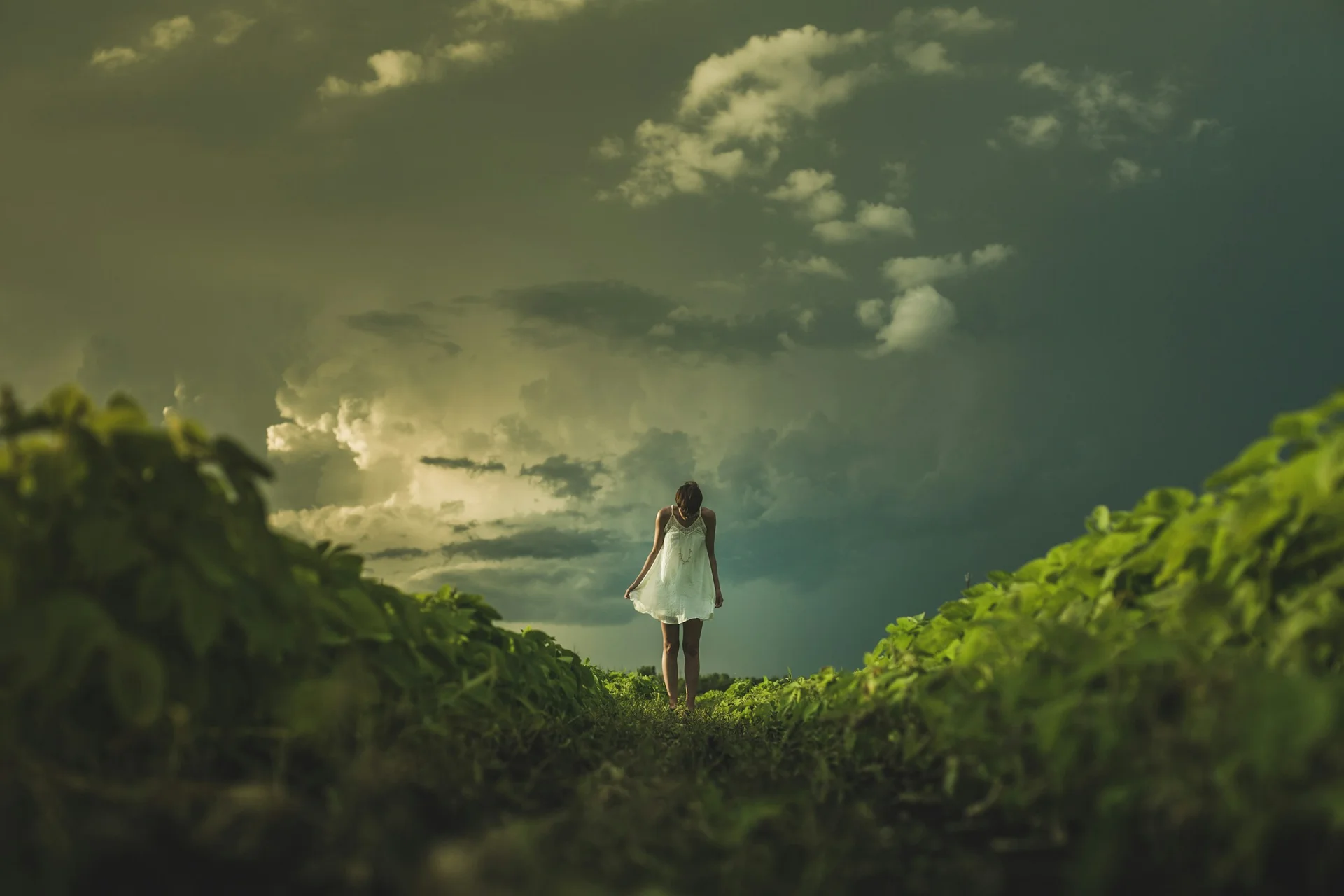
                    A hillside gives a portrait plenty of space. There is sky above the figure, a line of land below and very little to explain where the eye should go. The white dress picks up the light without needing to compete with a busy background. A&hellip;
                ]]>
            </summary>
        <content type="html">
            <![CDATA[
                    <p><img src="https://demo.getpublii.eu/themes/blogmere/media/posts/35/portrait-hillside-1920.webp" class="type:primaryImage" alt="A woman in a white dress on a green hillside beneath a sky of gathering clouds" /></p>
                <p>A hillside gives a portrait plenty of space. There is sky above the figure, a line of land below and very little to explain where the eye should go. The white dress picks up the light without needing to compete with a busy background.</p>

<p>A simple setting does not make the photograph automatic. It makes the small decisions more visible: how far away to stand, where to place the horizon and whether the person feels comfortable enough to stop thinking about the camera.</p>

<h2>Begin with a conversation</h2>

<p>Explain the picture you have in mind in ordinary terms. Show the frame on the screen if that helps. Someone who understands why you are standing a particular distance away can contribute to the image rather than waiting for a series of instructions.</p>

<p>Make a few photographs before trying to perfect a pose. The first frames give both of you something to respond to. A hand may look tense, the wind may be catching a sleeve, or a slight turn may make the whole arrangement feel easier.</p>

<figure class="post__image">
    <img loading="lazy"         src="https://demo.getpublii.eu/themes/blogmere/media/posts/35/portrait-light-1920.webp"
        alt="A woman in white with a flowing pink scarf photographed from below"
        width="1920"
        height="1280"
     sizes="(min-width: 1200px) 790px, 83vw" srcset="https://demo.getpublii.eu/themes/blogmere/media/posts/35/responsive/portrait-light-1920-480.webp 480w ,https://demo.getpublii.eu/themes/blogmere/media/posts/35/responsive/portrait-light-1920-640.webp 640w ,https://demo.getpublii.eu/themes/blogmere/media/posts/35/responsive/portrait-light-1920-960.webp 960w ,https://demo.getpublii.eu/themes/blogmere/media/posts/35/responsive/portrait-light-1920-1280.webp 1280w ,https://demo.getpublii.eu/themes/blogmere/media/posts/35/responsive/portrait-light-1920-1600.webp 1600w ,https://demo.getpublii.eu/themes/blogmere/media/posts/35/responsive/portrait-light-1920-1920.webp 1920w">
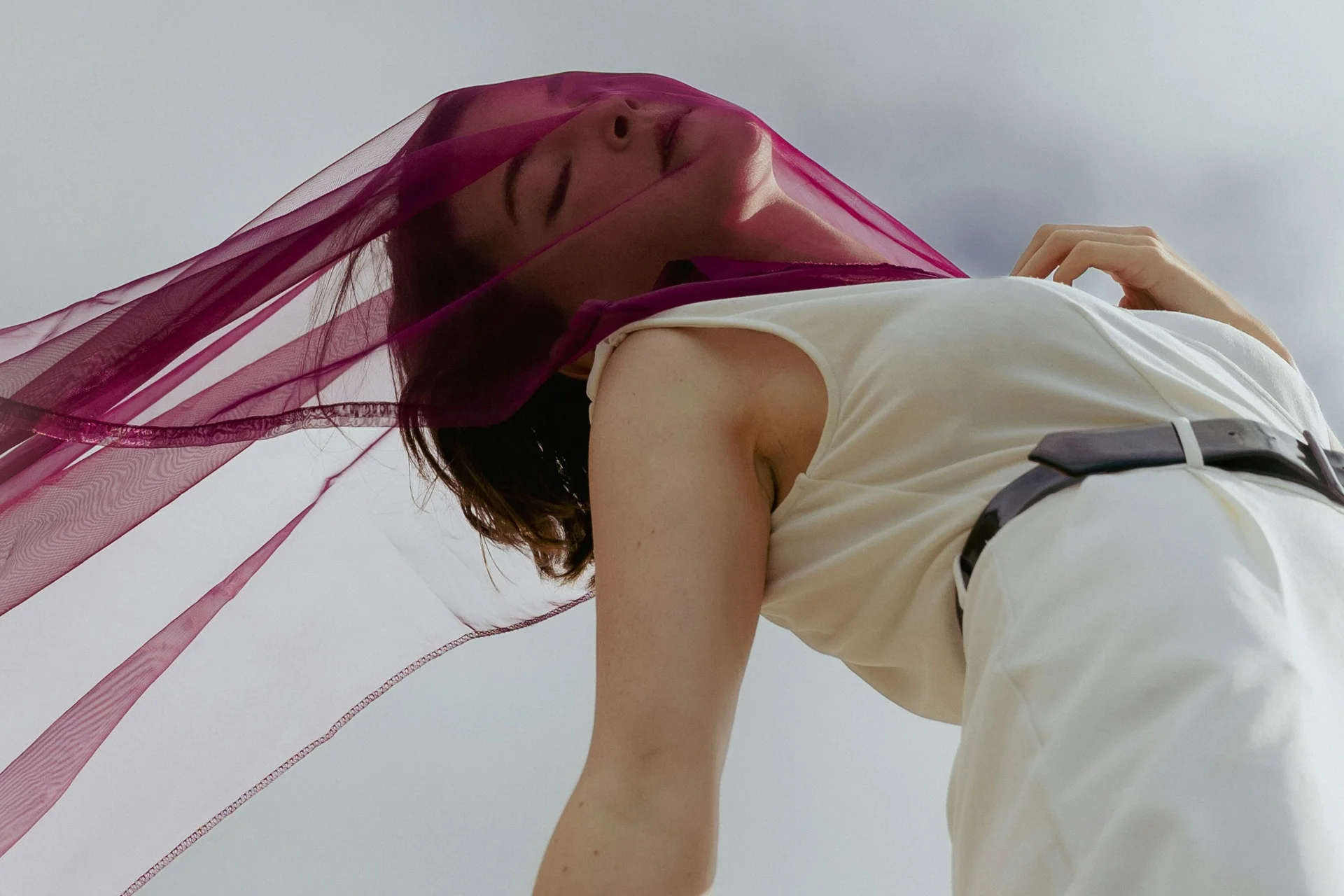
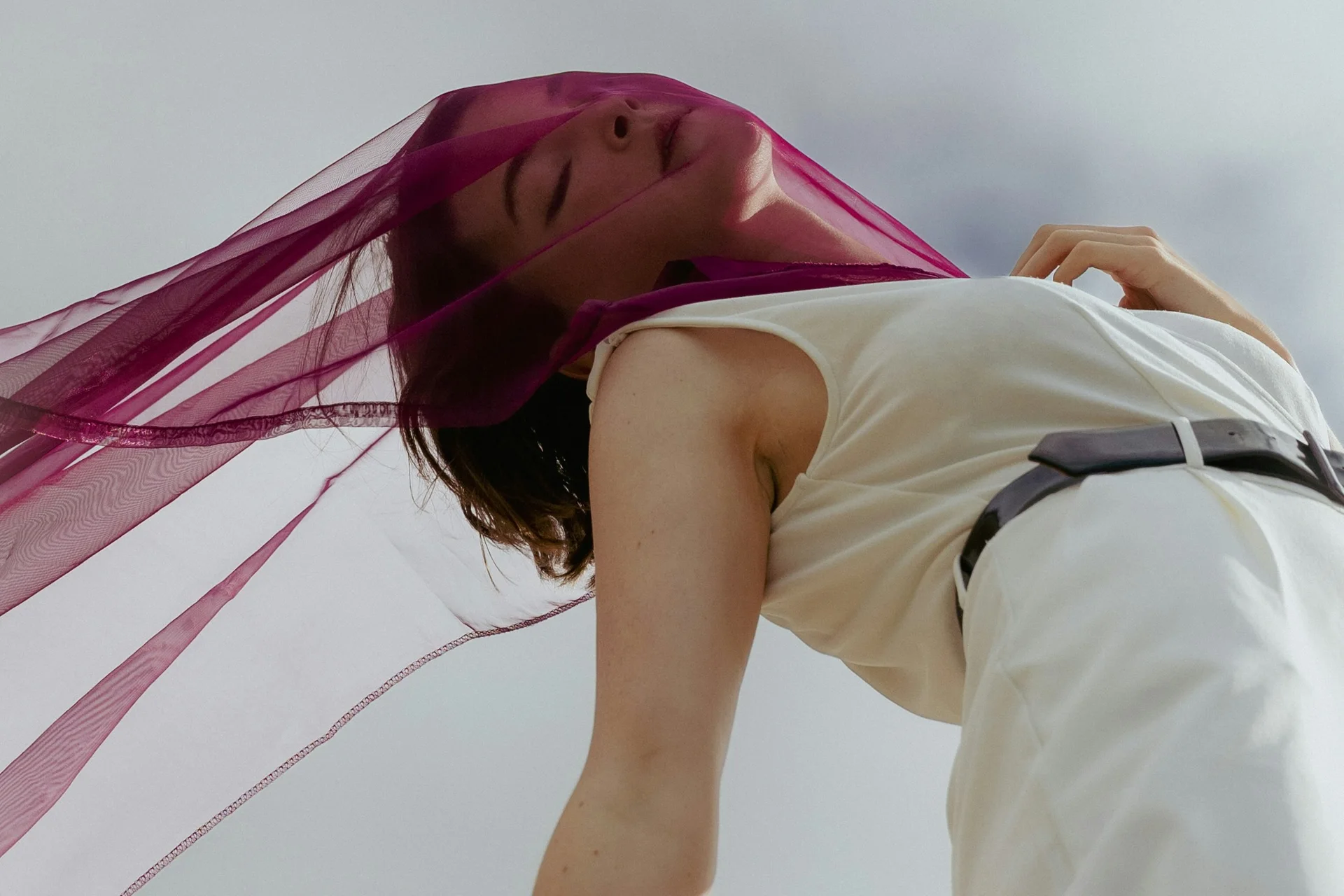
    <figcaption>Fabric and open sky give another portrait a loose, moving edge.</figcaption>
</figure>

<p>The second photograph uses cloth to change the outline of the figure. Its energy comes partly from what cannot be held still. You can plan the relationship between the person and the sky, then let a little movement decide the rest.</p>

<blockquote>
    <p>Give the person time to become part of the place before asking the picture to be finished.</p>
</blockquote>

<h2>Look beyond the expression</h2>

<p>A portrait is carried by more than a face. Shoulders, hands and the way someone stands on uneven ground all contribute to it. If the expression is relaxed but the rest of the body looks uncomfortable, take a break rather than adding more directions.</p>

<p>Step back and check the edges of the frame. A horizon crossing at an awkward point or a bright object near the border can distract from a good moment. Often a small change in your own position is easier than asking the person to move again.</p>

<p>When choosing the final image, keep a few that differ in mood instead of selecting only the most technically tidy frame. Share the shortlist with the person you photographed. They may recognise something in a quieter picture that you overlooked.</p>

<p>Patience does not have to mean a long session. It means allowing enough time for an ordinary exchange, a few adjustments and a moment when neither person is rushing to finish.</p>
            ]]>
        </content>
    </entry>
    <entry>
        <title>Following the shade through a colonnade</title>
        <author>
            <name>Jane Doe</name>
        </author>
        <link href="https://demo.getpublii.eu/themes/blogmere/stories/post-story/"/>
        <id>https://demo.getpublii.eu/themes/blogmere/stories/post-story/</id>
        <media:content url="https://demo.getpublii.eu/themes/blogmere/media/posts/36/egor-myznik-tHGIV1GIutY-unsplash.jpg" medium="image" />

        <updated>2026-10-01T02:00:00+02:00</updated>
            <summary type="html">
                <![CDATA[
                        <img src="https://demo.getpublii.eu/themes/blogmere/media/posts/36/egor-myznik-tHGIV1GIutY-unsplash.jpg" alt="A figure in orange walking through an ancient stone colonnade" />
                    The columns do most of the organising. Each one repeats the last, leaving a narrow opening through which the next can be seen. Farther into the passage, the shapes become smaller and closer together. A figure in orange interrupts the pattern just enough to give&hellip;
                ]]>
            </summary>
        <content type="html">
            <![CDATA[
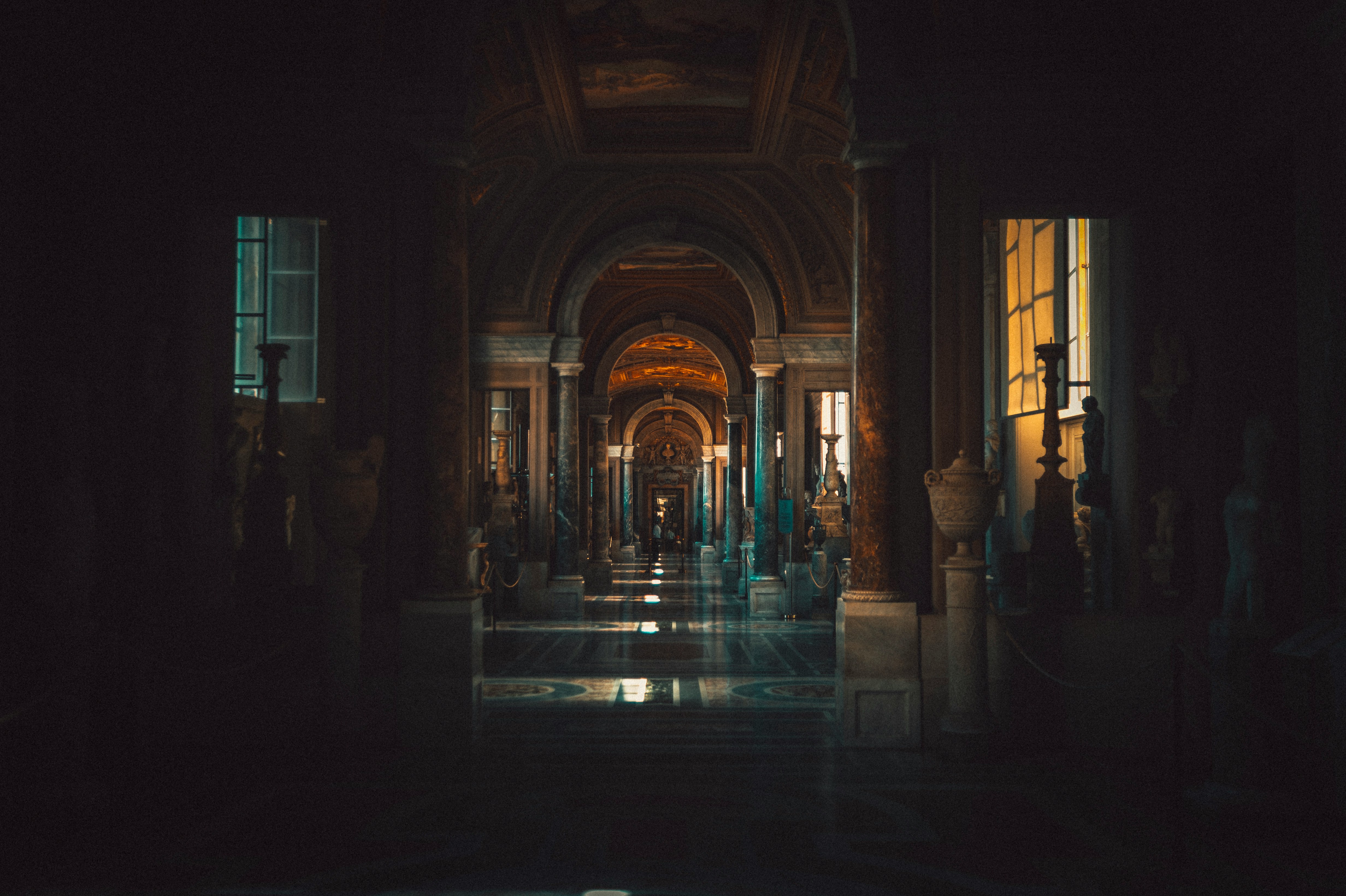
                    <p><img src="https://demo.getpublii.eu/themes/blogmere/media/posts/36/egor-myznik-tHGIV1GIutY-unsplash.jpg" class="type:primaryImage" alt="A figure in orange walking through an ancient stone colonnade" /></p>
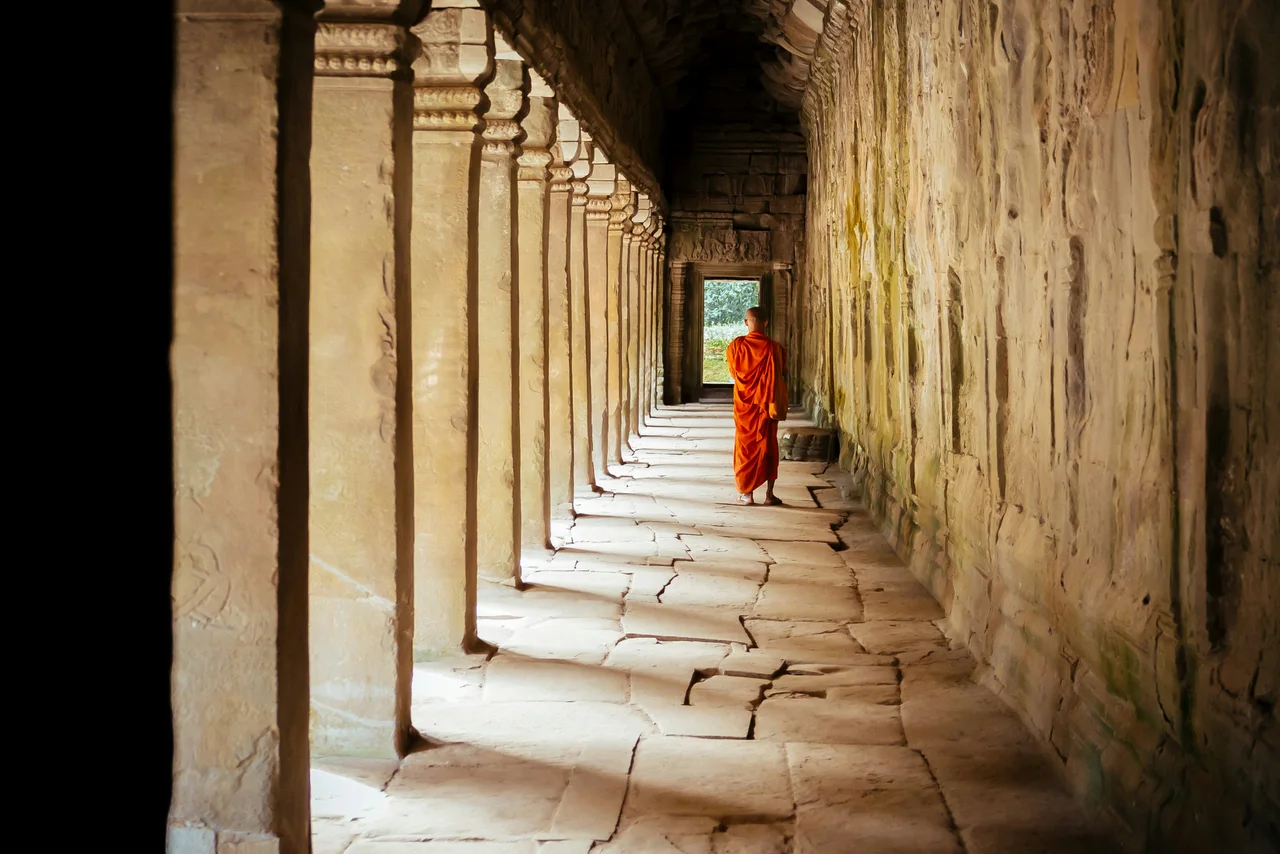
                <p>The columns do most of the organising. Each one repeats the last, leaving a narrow opening through which the next can be seen. Farther into the passage, the shapes become smaller and closer together. A figure in orange interrupts the pattern just enough to give it scale.</p>
<p>A place like this can seem to offer a finished composition before you lift the camera. Stand at one end, point along the corridor and the lines will lead somewhere. The more interesting decision is how much of that order to keep.</p>
<h2>Move away from the exact centre</h2>
<p>A small step to one side changes the rhythm. One row of columns may grow heavier while the other opens up. The passage can feel wider, darker or less symmetrical without anything in it moving at all.</p>
<p>Try a few positions before settling on one. Pay attention to the opening at the far end as well as to the nearest column. If the distant light becomes too dominant, a slight change in angle can give the foreground more weight.</p>
<blockquote>
<p>Leave enough room in the plan for the photograph to surprise both of you.</p>
</blockquote>
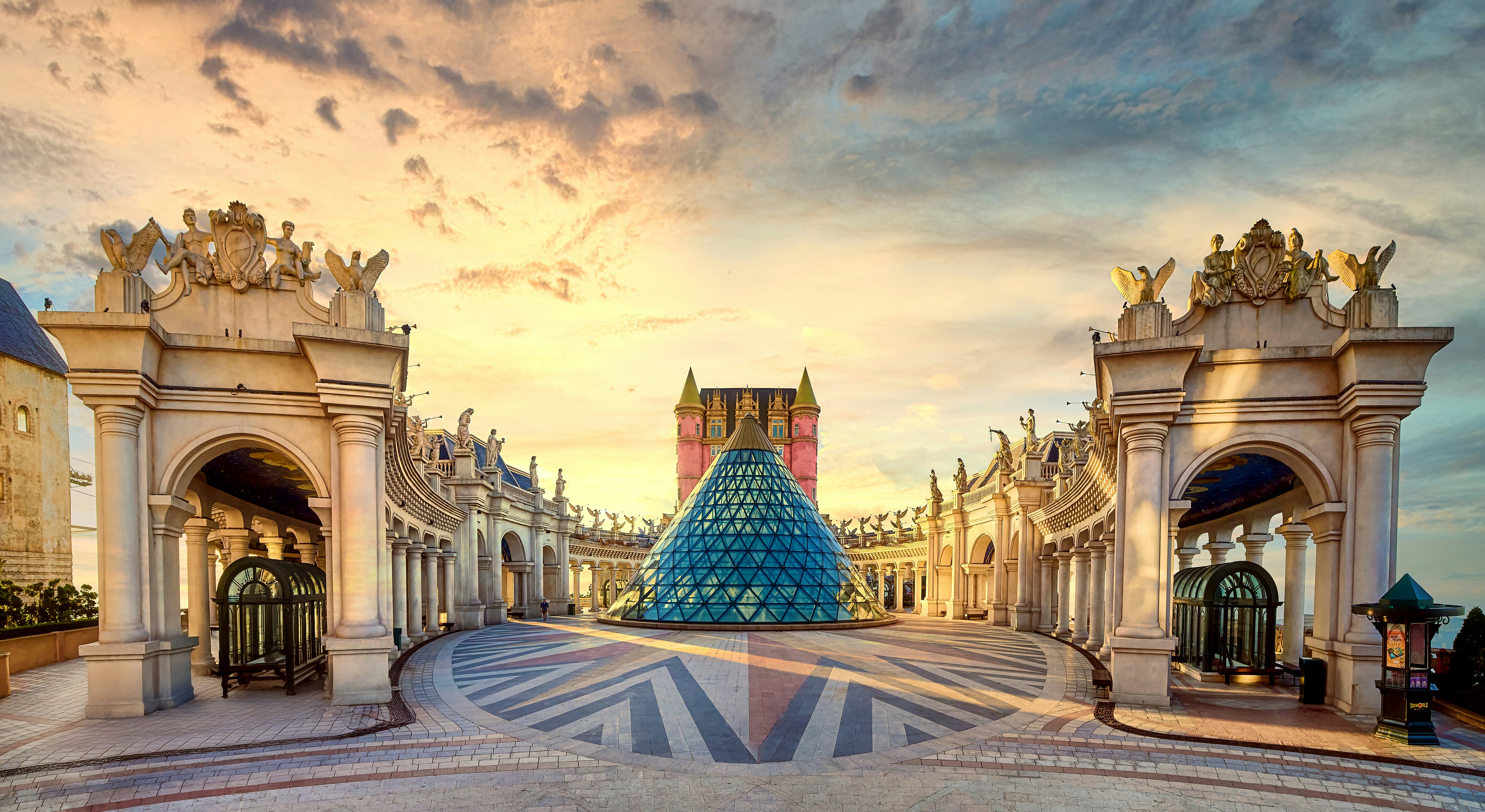
<p>The courtyard has fewer repeated lines, but it uses the same basic invitation: a darker edge opens onto something brighter. Plants soften the geometry, and the blue pots give the eye places to pause. Comparing the two spaces makes their different scales easier to feel.</p>
<figure class="post__image post__image--wide"><img loading="lazy" src="https://demo.getpublii.eu/themes/blogmere/media/posts/36/vivu-vietnam-m6egSMcTmss-unsplash.jpg" alt="European-style architectural plaza with a glass pyramid and grand colonnades under a golden sunset sky." width="5000" height="2735" sizes="(min-width: 1200px) 790px, 83vw" srcset="https://demo.getpublii.eu/themes/blogmere/media/posts/36/responsive/vivu-vietnam-m6egSMcTmss-unsplash-480.webp 480w ,https://demo.getpublii.eu/themes/blogmere/media/posts/36/responsive/vivu-vietnam-m6egSMcTmss-unsplash-640.webp 640w ,https://demo.getpublii.eu/themes/blogmere/media/posts/36/responsive/vivu-vietnam-m6egSMcTmss-unsplash-960.webp 960w ,https://demo.getpublii.eu/themes/blogmere/media/posts/36/responsive/vivu-vietnam-m6egSMcTmss-unsplash-1280.webp 1280w ,https://demo.getpublii.eu/themes/blogmere/media/posts/36/responsive/vivu-vietnam-m6egSMcTmss-unsplash-1600.webp 1600w ,https://demo.getpublii.eu/themes/blogmere/media/posts/36/responsive/vivu-vietnam-m6egSMcTmss-unsplash-1920.webp 1920w">
<figcaption>Where classical European grandeur meets modern design under the golden hour glow.</figcaption>
</figure>
<h2>Wait for the right amount of life</h2>
<p>A person can help explain the size of a building without becoming the whole subject. Watch how the figure moves between light and shade. Clothing may briefly echo a colour in the stone, or stand apart from it, as the orange does here.</p>
<p>There is no need to ask a stranger to walk the passage again. If the moment has gone, work with the empty space or wait for a different arrangement. Architecture offers enough fixed information that an unplanned gesture can make the picture feel less predetermined.</p>
<p>Before leaving, make one frame that includes something imperfect: a worn edge, a patch of uneven colour or the way the paving meets a column. Repetition gives the passage its structure. Those smaller differences make it a place people have actually moved through.</p>
            ]]>
        </content>
    </entry>
    <entry>
        <title>A portrait with room for the wind</title>
        <author>
            <name>Jane Doe</name>
        </author>
        <link href="https://demo.getpublii.eu/themes/blogmere/stories/post-story-split/"/>
        <id>https://demo.getpublii.eu/themes/blogmere/stories/post-story-split/</id>
        <media:content url="https://demo.getpublii.eu/themes/blogmere/media/posts/37/portrait-light-1920.webp" medium="image" />

        <updated>2026-10-01T02:00:00+02:00</updated>
            <summary type="html">
                <![CDATA[
                        <img src="https://demo.getpublii.eu/themes/blogmere/media/posts/37/portrait-light-1920.webp" alt="A woman in white with a flowing pink scarf photographed from below" />
                    The fabric lifts away from the figure and changes the shape of the portrait. Pale cloth catches the light; pink adds a stronger edge against the sky. The camera looks upward, leaving the ground out of the picture and giving the movement room to spread.
                ]]>
            </summary>
        <content type="html">
            <![CDATA[
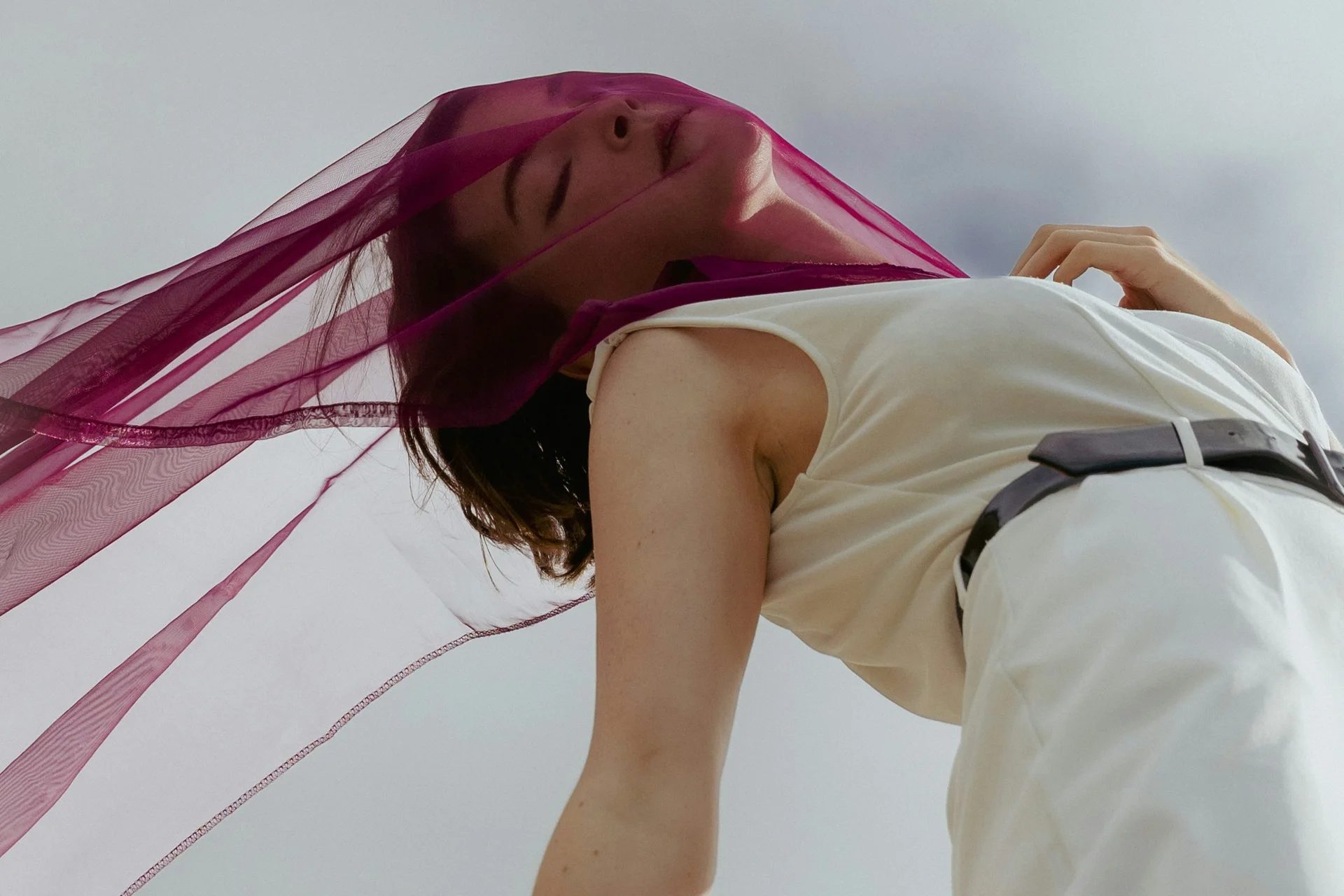
                    <p><img src="https://demo.getpublii.eu/themes/blogmere/media/posts/37/portrait-light-1920.webp" class="type:primaryImage" alt="A woman in white with a flowing pink scarf photographed from below" /></p>
                <p>The fabric lifts away from the figure and changes the shape of the portrait. Pale cloth catches the light; pink adds a stronger edge against the sky. The camera looks upward, leaving the ground out of the picture and giving the movement room to spread.</p>

<p>It is a useful reminder that a portrait can begin with a material as well as a face. A scarf, a loose sleeve or the hem of a dress introduces another kind of gesture. Unlike a fixed pose, it will not stay exactly where you put it.</p>

<h2>Agree on something simple</h2>

<p>A moving picture is easier to make when the person in it knows what can change. Choose a comfortable position, explain where the edges of the frame are and let the fabric move within that space. Too many instructions can make a light gesture feel like a complicated exercise.</p>

<p>Keep checking in. Looking upward, holding an arm or repeating a movement becomes tiring sooner than it may appear from behind the camera. Short attempts with pauses between them leave more room for an unforced expression.</p>

<figure class="post__image">
    <img loading="lazy"         src="https://demo.getpublii.eu/themes/blogmere/media/posts/37/style-1280.webp"
        alt="A red-haired woman reflected in a city shop window"
        width="1280"
        height="853"
     sizes="(min-width: 1200px) 790px, 83vw" srcset="https://demo.getpublii.eu/themes/blogmere/media/posts/37/responsive/style-1280-480.webp 480w ,https://demo.getpublii.eu/themes/blogmere/media/posts/37/responsive/style-1280-640.webp 640w ,https://demo.getpublii.eu/themes/blogmere/media/posts/37/responsive/style-1280-960.webp 960w ,https://demo.getpublii.eu/themes/blogmere/media/posts/37/responsive/style-1280-1280.webp 1280w ,https://demo.getpublii.eu/themes/blogmere/media/posts/37/responsive/style-1280-1600.webp 1600w ,https://demo.getpublii.eu/themes/blogmere/media/posts/37/responsive/style-1280-1920.webp 1920w">
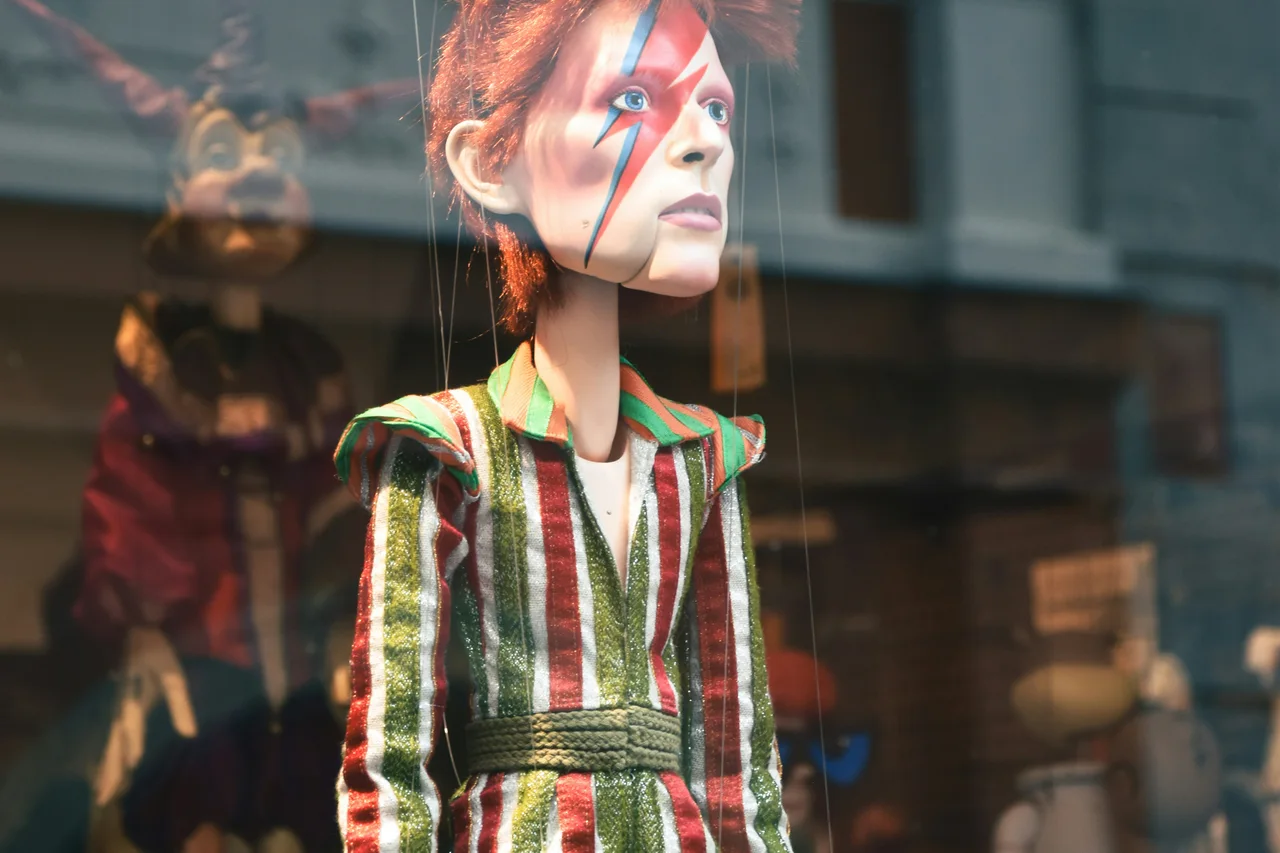
    <figcaption>A quieter portrait uses a window and a loose arrangement of hair instead of open sky.</figcaption>
</figure>

<p>A window changes the scale of the exchange. The movement becomes smaller, and the surrounding frame gives the person a place to lean or rest. It is a useful alternative when the weather or the mood no longer suits the more open picture.</p>

<blockquote>
    <p>Leave enough room in the plan for the photograph to surprise both of you.</p>
</blockquote>

<h2>Choose a gesture, not just a shape</h2>

<p>When reviewing the frames, look at the relationship between the fabric and the person. A spectacular fold may pull attention away from an expression that feels more interesting. The strongest image may be the one made just before or after the fullest movement.</p>

<p>Keep the colours close to what you remember. Pale fabric can lose its texture if it is pushed too bright, while an overly dark sky can make an easy moment feel theatrical. A restrained edit gives the cloth and the face a chance to belong to the same light.</p>

<p>The final picture only needs to hold one convincing instant. The wind can take care of making the next one different.</p>
            ]]>
        </content>
    </entry>
    <entry>
        <title>A better way to see the city, one ride at a time</title>
        <author>
            <name>Jane Doe</name>
        </author>
        <link href="https://demo.getpublii.eu/themes/blogmere/stories/a-better-way-to-see-the-city-one-ride-at-a-time/"/>
        <id>https://demo.getpublii.eu/themes/blogmere/stories/a-better-way-to-see-the-city-one-ride-at-a-time/</id>
        <media:content url="https://demo.getpublii.eu/themes/blogmere/media/posts/1/cycling.webp" medium="image" />

        <updated>2026-09-28T02:00:00+02:00</updated>
            <summary type="html">
                <![CDATA[
                        <img src="https://demo.getpublii.eu/themes/blogmere/media/posts/1/cycling.webp" alt="An orange tram on a tree-lined city street" />
                    A city looks different from a seat by the window. Shop signs arrive at eye level, a row of balconies slips past, and the traffic lights briefly hold an entire street still. There is time to notice a florist carrying buckets outside or someone turning&hellip;
                ]]>
            </summary>
        <content type="html">
            <![CDATA[
                    <p><img src="https://demo.getpublii.eu/themes/blogmere/media/posts/1/cycling.webp" class="type:primaryImage" alt="An orange tram on a tree-lined city street" /></p>
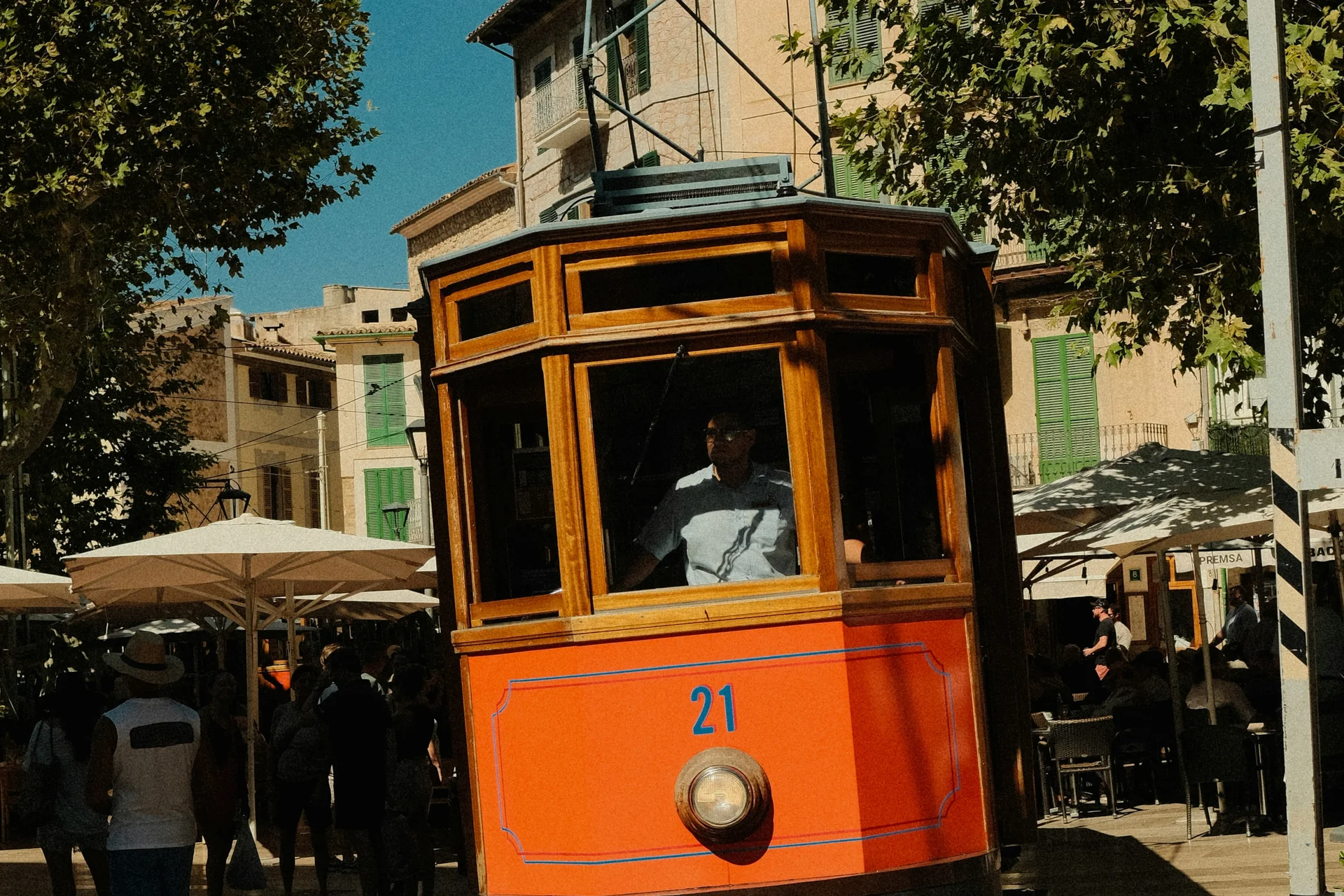
                <p>A city looks different from a seat by the window. Shop signs arrive at eye level, a row of balconies slips past, and the traffic lights briefly hold an entire street still. There is time to notice a florist carrying buckets outside or someone turning a key in a shop door.</p>
<p>Walking gives you the details. A tram journey joins them together. You begin to see where the busy shopping street becomes a neighbourhood, where the trees get taller, and where people start carrying groceries instead of shopping bags. The route becomes easier to understand than it was on a map.</p>
<h2>Take the seat with a view</h2>
<p>Leave the phone in your pocket for the first few stops. It is tempting to keep checking where you are, but the buildings can tell you something too. Look back along a street as you cross it. Sometimes the view that lasts only a second is the one you remember.</p>
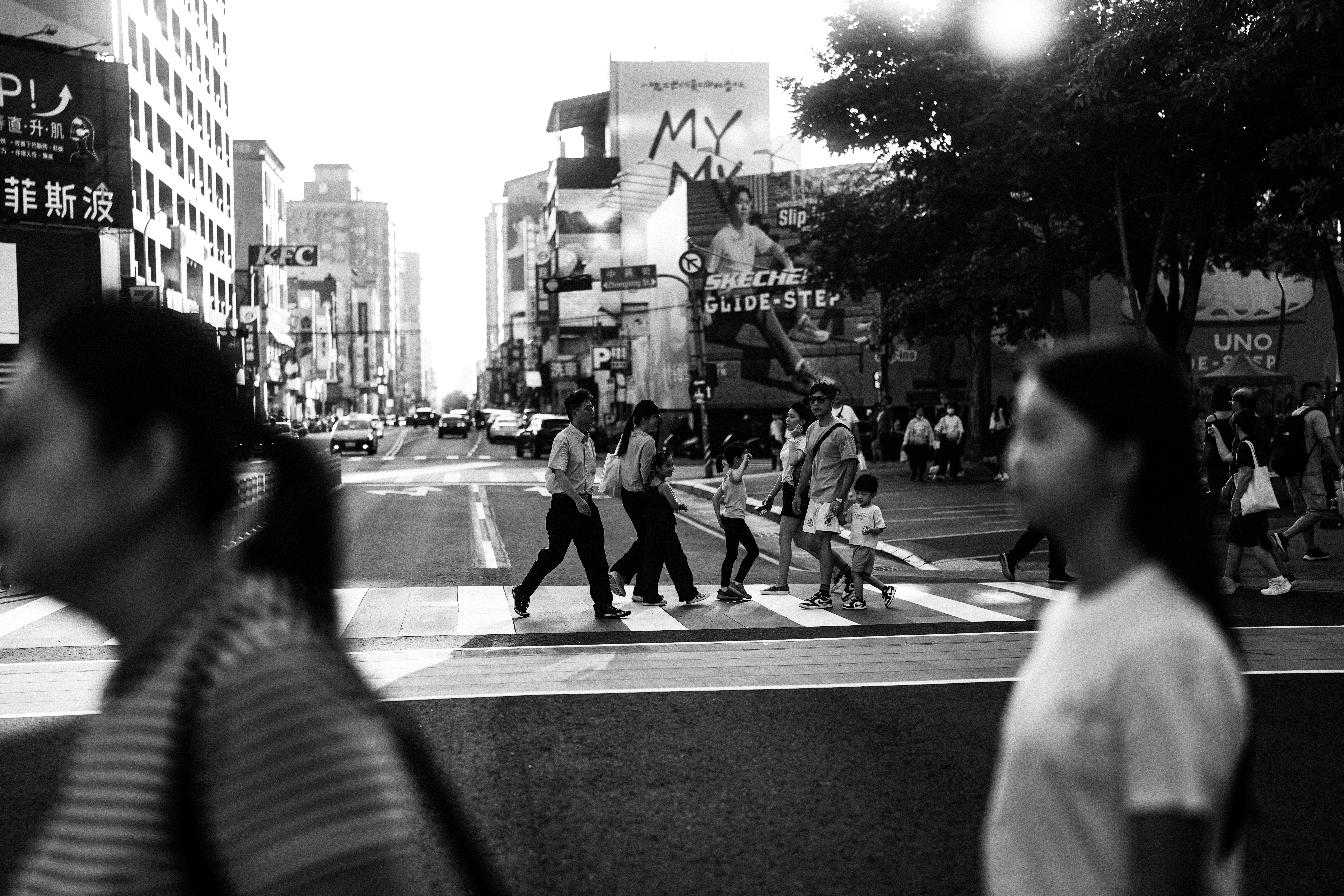
<p>From the window, the city reveals patterns you miss while walking on the pavement. The tram carries you smoothly across wide intersections, turning the flow of traffic and pedestrian crossings into a living, shifting frame of urban life.</p>
<figure class="post__image post__image--wide"><img loading="lazy" src="https://demo.getpublii.eu/themes/blogmere/media/posts/1/ricky-t-b18qY422D2g-unsplash.jpg" alt="Pedestrians crossing broad white stripes on a city street" width="7008" height="4672" sizes="(min-width: 1200px) 790px, 83vw" srcset="https://demo.getpublii.eu/themes/blogmere/media/posts/1/responsive/ricky-t-b18qY422D2g-unsplash-480.webp 480w ,https://demo.getpublii.eu/themes/blogmere/media/posts/1/responsive/ricky-t-b18qY422D2g-unsplash-640.webp 640w ,https://demo.getpublii.eu/themes/blogmere/media/posts/1/responsive/ricky-t-b18qY422D2g-unsplash-960.webp 960w ,https://demo.getpublii.eu/themes/blogmere/media/posts/1/responsive/ricky-t-b18qY422D2g-unsplash-1280.webp 1280w ,https://demo.getpublii.eu/themes/blogmere/media/posts/1/responsive/ricky-t-b18qY422D2g-unsplash-1600.webp 1600w ,https://demo.getpublii.eu/themes/blogmere/media/posts/1/responsive/ricky-t-b18qY422D2g-unsplash-1920.webp 1920w">
<figcaption>The crossing breaks the street into stripes and moving figures.</figcaption>
</figure>
<p>If something catches your attention, make a note and return on foot. A good tram ride can provide the beginning of a walk: a market awning, an unfamiliar park entrance, a cafe with its windows open. You do not have to investigate every possibility that morning.</p>
<p>Instead, let the line carry you further, collecting visual bookmarks along the way. Scouting the city this way removes the hurry, letting you gather ideas for future walks without the pressure of an immediate destination.</p>
<blockquote>
<p>A useful route leaves you with somewhere you would like to walk back to.</p>
</blockquote>
<p>By midday, the journey has reshaped how the neighbourhood fits together in your mind. Landmarks that felt far apart when seen from a map now feel connected, linked by the steady hum of steel rails and shared street corners.</p>
<p>You can step off at the terminus, spend the afternoon retracing the steps you previewed from the window, and let the city surprise you once more as the daylight begins to shift.</p>
<h2>The ride home</h2>
<p>The same journey in the opposite direction often feels unfamiliar. Light falls on another side of the buildings, the seats fill with a different crowd, and a corner hidden on the way out comes into view. Keep the return ticket handy and try the other side of the carriage.</p>
<p>There is a particular pleasure in arriving home with one small addition to your mental map. Perhaps it is only the location of a secondhand bookshop. That is enough reason to take the tram again.</p>
            ]]>
        </content>
    </entry>
    <entry>
        <title>The quiet beauty of the coast</title>
        <author>
            <name>Alex Morgan</name>
        </author>
        <link href="https://demo.getpublii.eu/themes/blogmere/stories/the-quiet-beauty-of-the-coast/"/>
        <id>https://demo.getpublii.eu/themes/blogmere/stories/the-quiet-beauty-of-the-coast/</id>
        <media:content url="https://demo.getpublii.eu/themes/blogmere/media/posts/2/norway.webp" medium="image" />

        <updated>2026-09-24T02:00:00+02:00</updated>
            <summary type="html">
                <![CDATA[
                        <img src="https://demo.getpublii.eu/themes/blogmere/media/posts/2/norway.webp" alt="A small boat beside a rocky coast and a white sun umbrella" />
                    From above, the little boat looks almost suspended. Its pale hull sits against water dark enough to show the shape clearly, while the rock beside it catches the sun. A white umbrella makes a small patch of shelter at the edge of the frame. Coastal&hellip;
                ]]>
            </summary>
        <content type="html">
            <![CDATA[
                    <p><img src="https://demo.getpublii.eu/themes/blogmere/media/posts/2/norway.webp" class="type:primaryImage" alt="A small boat beside a rocky coast and a white sun umbrella" /></p>
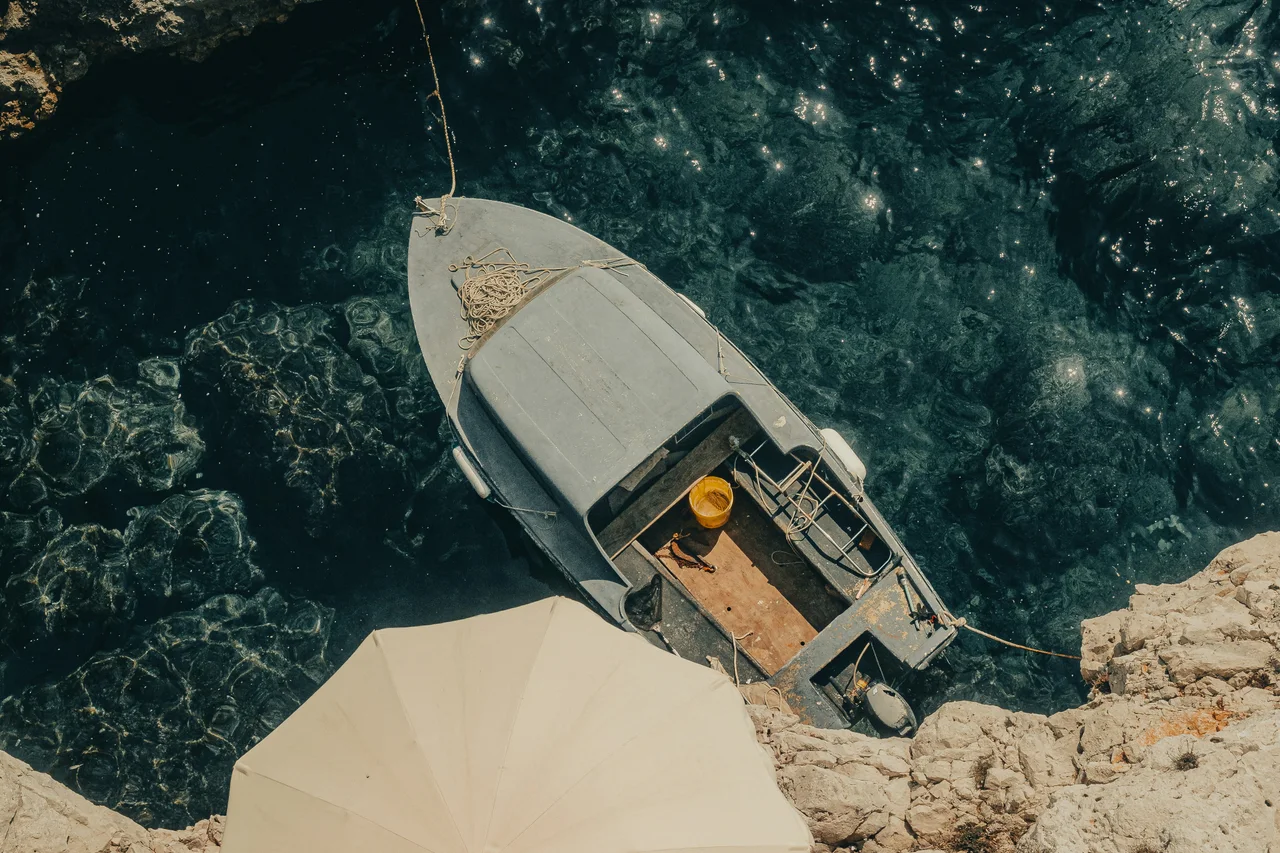
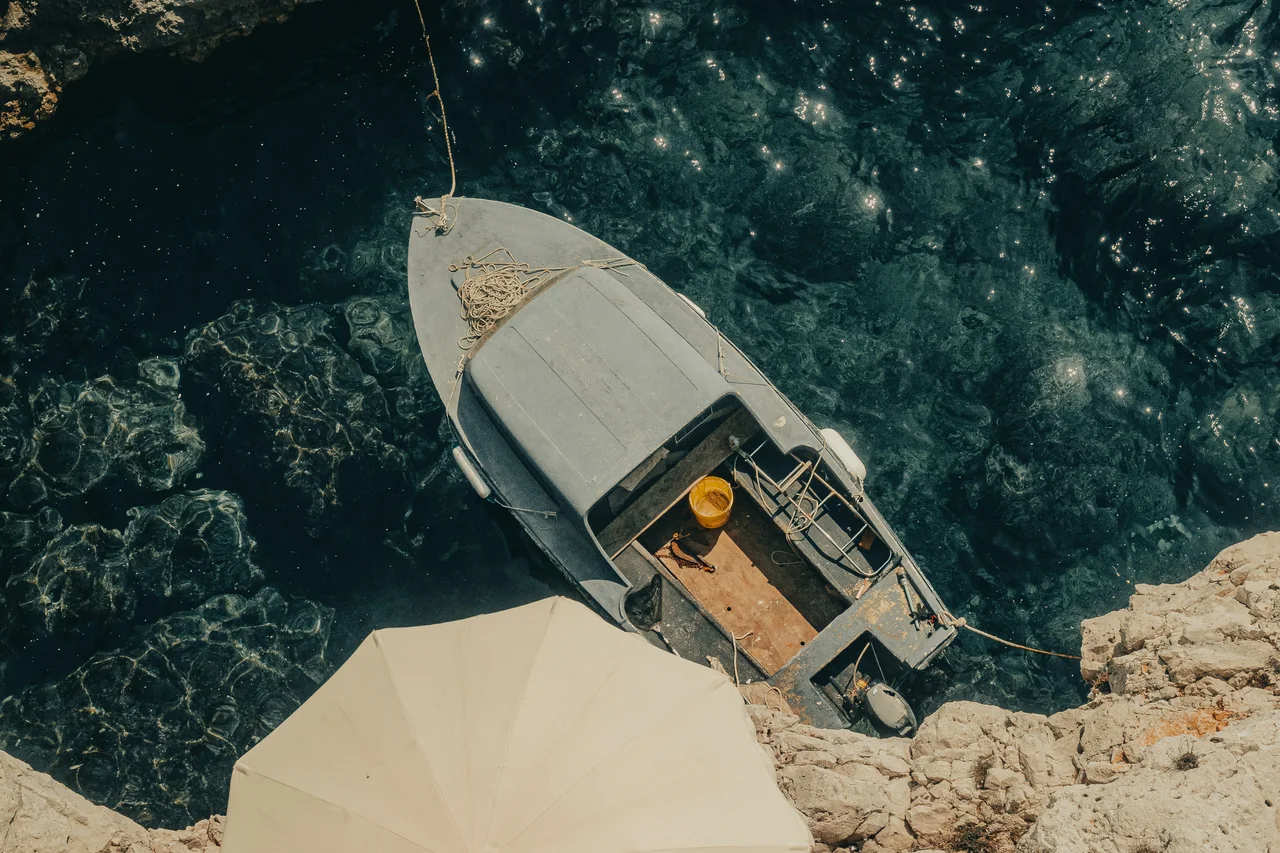
                <p>From above, the little boat looks almost suspended. Its pale hull sits against water dark enough to show the shape clearly, while the rock beside it catches the sun. A white umbrella makes a small patch of shelter at the edge of the frame.</p>

<p>Coastal photographs often become crowded with things that promise a holiday. This one works because there is room between its few elements. The boat has somewhere to move. The umbrella gives the eye a place to rest. You can follow the edge of the rock without immediately finding another object in the way.</p>

<h2>Stay with the edge</h2>

<p>The meeting of land and water is rarely a tidy line. Look closely and there are ledges, shallow pools and changes of colour that disappear in the wider view. A short stretch of shore can offer more to look at than a whole afternoon of changing locations.</p>

<figure class="post__image">
    <img loading="lazy"         src="https://demo.getpublii.eu/themes/blogmere/media/posts/2/slider-coastal-colours-1280.webp"
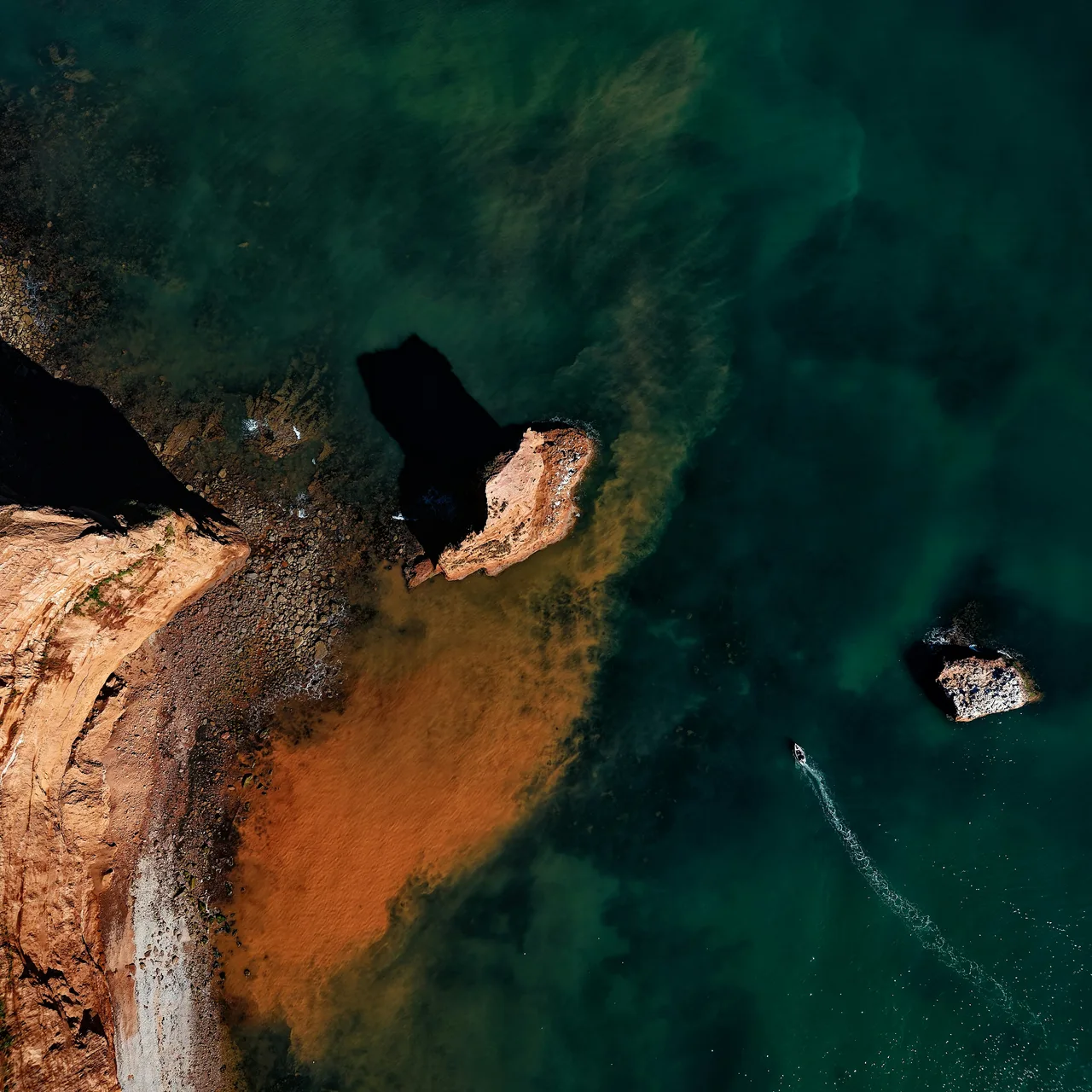
        alt="An aerial view of rust-coloured rocks surrounded by deep green seawater"
        width="1280"
        height="1280"
     sizes="(min-width: 1200px) 790px, 83vw" srcset="https://demo.getpublii.eu/themes/blogmere/media/posts/2/responsive/slider-coastal-colours-1280-480.webp 480w ,https://demo.getpublii.eu/themes/blogmere/media/posts/2/responsive/slider-coastal-colours-1280-640.webp 640w ,https://demo.getpublii.eu/themes/blogmere/media/posts/2/responsive/slider-coastal-colours-1280-960.webp 960w ,https://demo.getpublii.eu/themes/blogmere/media/posts/2/responsive/slider-coastal-colours-1280-1280.webp 1280w ,https://demo.getpublii.eu/themes/blogmere/media/posts/2/responsive/slider-coastal-colours-1280-1600.webp 1600w ,https://demo.getpublii.eu/themes/blogmere/media/posts/2/responsive/slider-coastal-colours-1280-1920.webp 1920w">
    <figcaption>Rust-coloured rock meets a deeper band of green water.</figcaption>
</figure>

<p>Try making a small set of pictures from one place. Include a broad view, something close enough to show texture, and a frame in which the water occupies most of the space. The photographs will have a relationship without needing to look alike.</p>

<p>It helps to put the camera down between them. The surface keeps changing, and watching it for a while makes it easier to choose a moment instead of collecting dozens of nearly identical frames.</p>

<h2>What to leave outside the frame</h2>

<p>A photograph can suggest the feeling of a place without accounting for everything there. The car park, the crowded path and the lunch bag may all sit a few steps away. Choosing a frame is a decision about attention, not a claim that the rest of the world has disappeared.</p>

<p>Keep the picture that brings you back to the colour of that water. A quieter image can take a little longer to reveal why you want to keep looking.</p>
            ]]>
        </content>
    </entry>
    <entry>
        <title>Finding your rhythm in the water</title>
        <author>
            <name>Jane Doe</name>
        </author>
        <link href="https://demo.getpublii.eu/themes/blogmere/stories/finding-your-rhythm-in-the-water/"/>
        <id>https://demo.getpublii.eu/themes/blogmere/stories/finding-your-rhythm-in-the-water/</id>
        <media:content url="https://demo.getpublii.eu/themes/blogmere/media/posts/3/swimming.webp" medium="image" />

        <updated>2026-09-21T02:00:00+02:00</updated>
            <summary type="html">
                <![CDATA[
                        <img src="https://demo.getpublii.eu/themes/blogmere/media/posts/3/swimming.webp" alt="A swimmer floating in clear turquoise water" />
                    The blue in a swimming photograph is never just blue. There are pale patches where sunlight reaches the bottom, deeper strips between the ripples, and a moving outline around the swimmer. The body belongs to the pattern for a moment, then changes it with the&hellip;
                ]]>
            </summary>
        <content type="html">
            <![CDATA[
                    <p><img src="https://demo.getpublii.eu/themes/blogmere/media/posts/3/swimming.webp" class="type:primaryImage" alt="A swimmer floating in clear turquoise water" /></p>
                <p>The blue in a swimming photograph is never just blue. There are pale patches where sunlight reaches the bottom, deeper strips between the ripples, and a moving outline around the swimmer. The body belongs to the pattern for a moment, then changes it with the next stroke.</p>

<p>That is part of the appeal of an afternoon by the water. Familiar measures of time become less useful. A conversation pauses while someone swims away. A towel dries. The shade moves across the edge of the pool, and eventually it is time to move the chairs.</p>

<h2>Leave some of the afternoon empty</h2>

<p>There is no need to make a day like this carry a long list of plans. Bring something to read, then accept that you might read only a few pages. Choose a comfortable place to sit where you can watch the surface change. The interruption is often more interesting than the book.</p>

<figure class="post__image">
    <img loading="lazy"         src="https://demo.getpublii.eu/themes/blogmere/media/posts/3/norway-1280.webp"
        alt="A small boat beside a rocky coast and a white sun umbrella"
        width="1280"
        height="853"
     sizes="(min-width: 1200px) 790px, 83vw" srcset="https://demo.getpublii.eu/themes/blogmere/media/posts/3/responsive/norway-1280-480.webp 480w ,https://demo.getpublii.eu/themes/blogmere/media/posts/3/responsive/norway-1280-640.webp 640w ,https://demo.getpublii.eu/themes/blogmere/media/posts/3/responsive/norway-1280-960.webp 960w ,https://demo.getpublii.eu/themes/blogmere/media/posts/3/responsive/norway-1280-1280.webp 1280w ,https://demo.getpublii.eu/themes/blogmere/media/posts/3/responsive/norway-1280-1600.webp 1600w ,https://demo.getpublii.eu/themes/blogmere/media/posts/3/responsive/norway-1280-1920.webp 1920w">
    <figcaption>A small boat and a shaded place to sit at the water&#x27;s edge.</figcaption>
</figure>

<p>The best photographs can come from the pauses around swimming: a hand resting on a towel, sandals left in a neat pair, wet footprints fading on stone. Ask before including someone in a close photograph. A relaxed afternoon is more valuable than a picture obtained by making another person uncomfortable.</p>

<blockquote>
    <p>There is room for a day whose main event is staying a little longer.</p>
</blockquote>

<h2>When the light changes</h2>

<p>Later, the surface loses some of its bright detail and begins reflecting what stands above it. The scene can look entirely different without anyone having moved their chair. Make another photograph if you feel like it, but resist the urge to turn every change into a task.</p>

<p>Pack slowly enough to check under the chairs. Fold the towel loosely, finish the last page, and leave the rest of the afternoon in the photograph. It will still be there when the week becomes busy again.</p>
            ]]>
        </content>
    </entry>
    <entry>
        <title>Museums worth getting lost in</title>
        <author>
            <name>Alex Morgan</name>
        </author>
        <link href="https://demo.getpublii.eu/themes/blogmere/stories/museums-worth-getting-lost-in/"/>
        <id>https://demo.getpublii.eu/themes/blogmere/stories/museums-worth-getting-lost-in/</id>
        <media:content url="https://demo.getpublii.eu/themes/blogmere/media/posts/4/museum.webp" medium="image" />

        <updated>2026-09-18T02:00:00+02:00</updated>
            <summary type="html">
                <![CDATA[
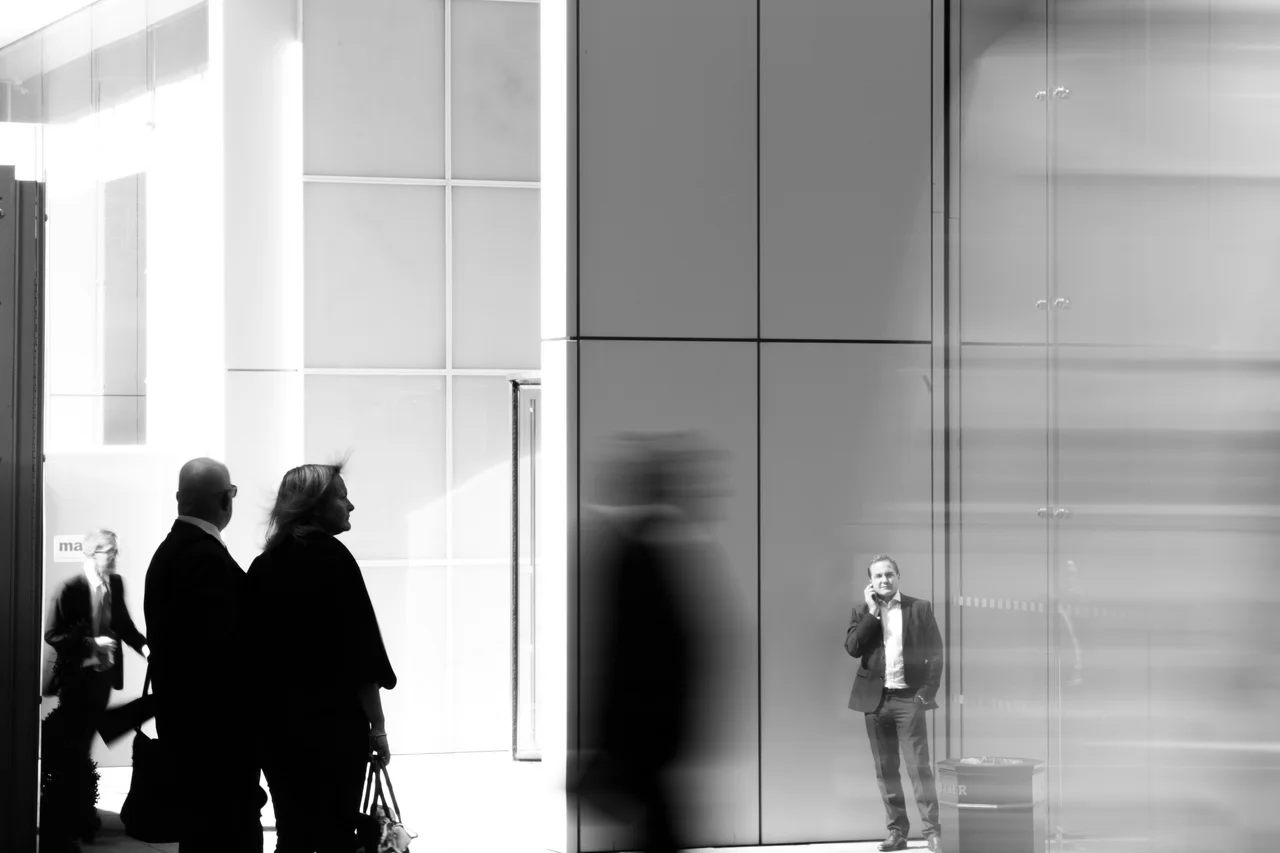
                        <img src="https://demo.getpublii.eu/themes/blogmere/media/posts/4/museum.webp" alt="Visitors silhouetted in a bright museum hall" />
                    A museum map can make an afternoon feel like an examination. There are rooms you have not entered, a special exhibition upstairs and several important works marked with small stars. Before you have looked closely at anything, the building has handed you a list of&hellip;
                ]]>
            </summary>
        <content type="html">
            <![CDATA[
                    <p><img src="https://demo.getpublii.eu/themes/blogmere/media/posts/4/museum.webp" class="type:primaryImage" alt="Visitors silhouetted in a bright museum hall" /></p>
                <p>A museum map can make an afternoon feel like an examination. There are rooms you have not entered, a special exhibition upstairs and several important works marked with small stars. Before you have looked closely at anything, the building has handed you a list of things to finish.</p>

<p>Choose a smaller visit. Start with the room that interests you, rather than the first room on the suggested route. If a photograph, vessel or painting catches your attention, stay with it for a little while. The label will still be there when you have had a look of your own.</p>

<h2>Before reading the label</h2>

<p>Notice where your eye goes first. It might be the brightest patch of colour, an awkward hand or a small object near the edge. Then look at the parts you skipped. This simple second pass often changes the picture more than taking another step around the room.</p>

<p>A label can add a date, a material or the name of a place. Let that information sharpen what you have seen. You do not need to memorize it to have spent your time well.</p>

<figure class="post__image post__image--wide">
    <img loading="lazy"         src="https://demo.getpublii.eu/themes/blogmere/media/posts/4/sandstone-1280.webp"
        alt="A figure in orange walking through an ancient stone colonnade"
        width="1280"
        height="854"
     sizes="(min-width: 1200px) 790px, 83vw" srcset="https://demo.getpublii.eu/themes/blogmere/media/posts/4/responsive/sandstone-1280-480.webp 480w ,https://demo.getpublii.eu/themes/blogmere/media/posts/4/responsive/sandstone-1280-640.webp 640w ,https://demo.getpublii.eu/themes/blogmere/media/posts/4/responsive/sandstone-1280-960.webp 960w ,https://demo.getpublii.eu/themes/blogmere/media/posts/4/responsive/sandstone-1280-1280.webp 1280w ,https://demo.getpublii.eu/themes/blogmere/media/posts/4/responsive/sandstone-1280-1600.webp 1600w ,https://demo.getpublii.eu/themes/blogmere/media/posts/4/responsive/sandstone-1280-1920.webp 1920w">
    <figcaption>Repeated columns lead the eye through a long passage.</figcaption>
</figure>

<h2>The building is part of the visit</h2>

<p>Sit down when you find a bench. From a distance, the room has a composition of its own: doors framing other rooms, people crossing a patch of light, a sculpture seen against a blank wall. Looking from the bench may reveal something that was difficult to see standing directly in front of a work.</p>

<p>Before leaving, return to one thing you liked. The second encounter is different because you know where it is. You can spend less time deciding whether to stop and more time noticing what escaped you before.</p>

<p>A postcard is a useful souvenir if it helps you remember that encounter. Buy the image you want to look at again, even if it was not the most famous work in the building.</p>
            ]]>
        </content>
    </entry>
    <entry>
        <title>A morning out beyond the waves</title>
        <author>
            <name>Jane Doe</name>
        </author>
        <link href="https://demo.getpublii.eu/themes/blogmere/stories/a-morning-out-beyond-the-waves/"/>
        <id>https://demo.getpublii.eu/themes/blogmere/stories/a-morning-out-beyond-the-waves/</id>
        <media:content url="https://demo.getpublii.eu/themes/blogmere/media/posts/5/surfing.webp" medium="image" />

        <updated>2026-09-15T02:00:00+02:00</updated>
            <summary type="html">
                <![CDATA[
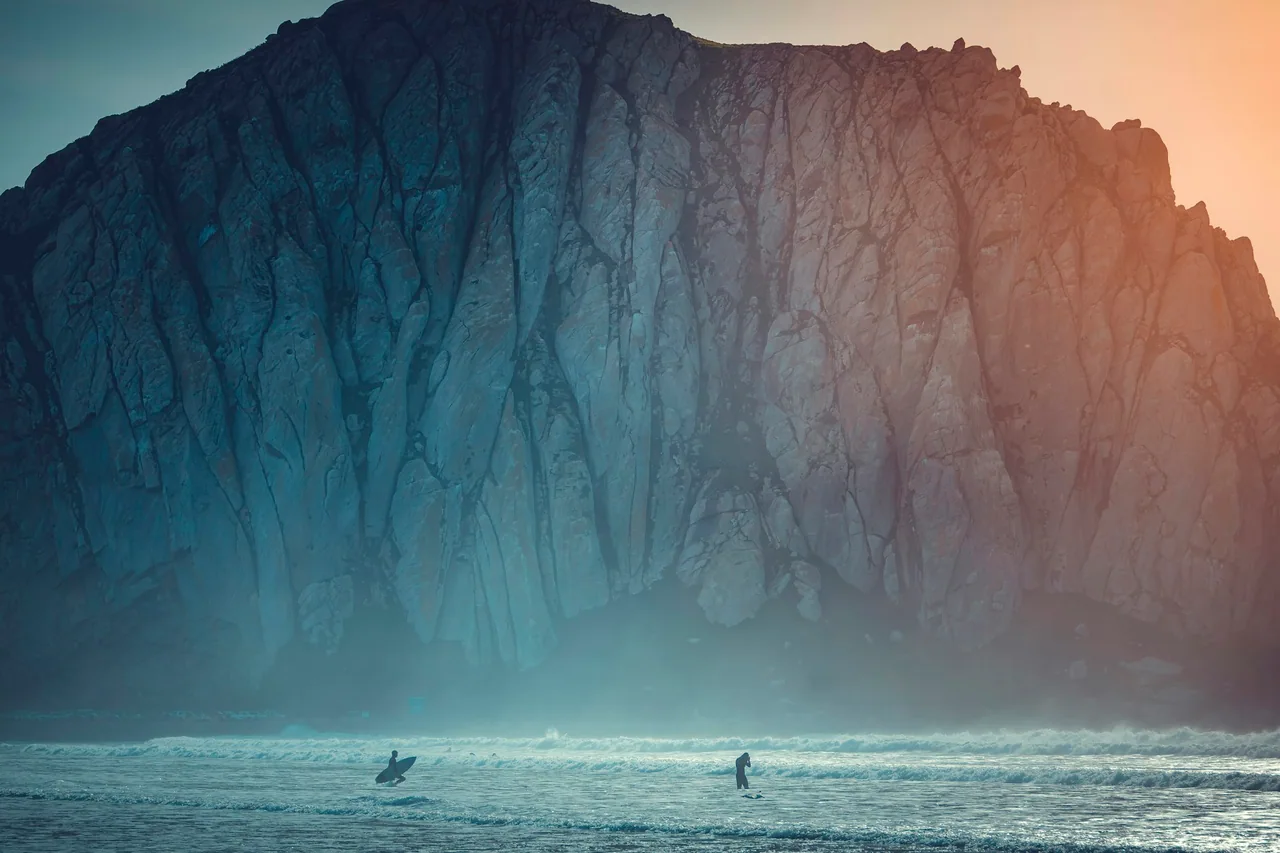
                        <img src="https://demo.getpublii.eu/themes/blogmere/media/posts/5/surfing.webp" alt="Surfers waiting beneath the cliffs of Morro Rock" />
                    In a wide photograph of the sea, the surfers are almost punctuation. Their small figures give scale to the water and the immense face of rock behind them. Take them away and the scene might feel remote; leave them in and you begin looking for&hellip;
                ]]>
            </summary>
        <content type="html">
            <![CDATA[
                    <p><img src="https://demo.getpublii.eu/themes/blogmere/media/posts/5/surfing.webp" class="type:primaryImage" alt="Surfers waiting beneath the cliffs of Morro Rock" /></p>
                <p>In a wide photograph of the sea, the surfers are almost punctuation. Their small figures give scale to the water and the immense face of rock behind them. Take them away and the scene might feel remote; leave them in and you begin looking for movement.</p>

<p>The shore offers its own way of following a morning on the water. Watch one part of the scene for a few minutes. A figure disappears behind a swell, returns, then drifts into another position. Much of what makes the view interesting happens between the more dramatic moments.</p>

<h2>Give the water room</h2>

<p>When making a photograph from the beach, it is easy to keep moving closer with the lens. Try a wider frame as well. The headland, the band of pale water and the distance between people can explain the scale more clearly than a close view of one person.</p>

<figure class="post__image">
    <img loading="lazy"         src="https://demo.getpublii.eu/themes/blogmere/media/posts/5/slider-pier-sunset-1280.webp"
        alt="A Ferris wheel and pier silhouetted against an orange seaside sunset"
        width="1280"
        height="1280"
     sizes="(min-width: 1200px) 790px, 83vw" srcset="https://demo.getpublii.eu/themes/blogmere/media/posts/5/responsive/slider-pier-sunset-1280-480.webp 480w ,https://demo.getpublii.eu/themes/blogmere/media/posts/5/responsive/slider-pier-sunset-1280-640.webp 640w ,https://demo.getpublii.eu/themes/blogmere/media/posts/5/responsive/slider-pier-sunset-1280-960.webp 960w ,https://demo.getpublii.eu/themes/blogmere/media/posts/5/responsive/slider-pier-sunset-1280-1280.webp 1280w ,https://demo.getpublii.eu/themes/blogmere/media/posts/5/responsive/slider-pier-sunset-1280-1600.webp 1600w ,https://demo.getpublii.eu/themes/blogmere/media/posts/5/responsive/slider-pier-sunset-1280-1920.webp 1920w">
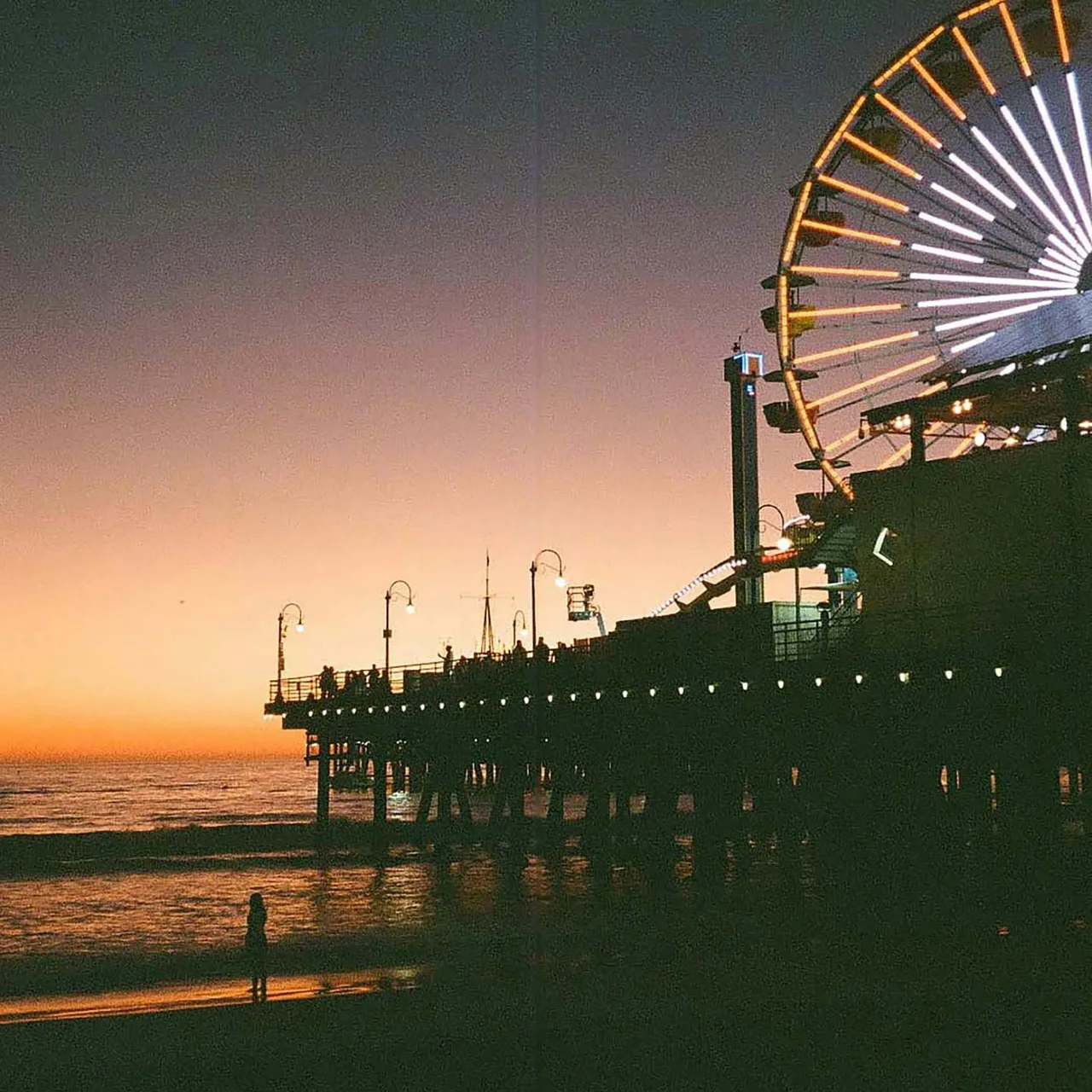
    <figcaption>A pier and a wheel become dark shapes against the evening sky.</figcaption>
</figure>

<p>A simple horizon needs care. Check the edges before pressing the shutter, especially if there is a small figure close to one of them. A little more room can turn an accidental crop into a deliberate composition.</p>

<p>The beach also has details that belong to the story. A board resting on sand, a jacket folded beside a bag, or the line where wet stone becomes dry can provide a quieter companion to the main photograph.</p>

<h2>Keep a small sequence</h2>

<p>Choose a few pictures that show different parts of the morning. Repeated versions of the same wave rarely add much. A broad opening image followed by a modest detail can bring the viewer closer without asking each photograph to be spectacular.</p>

<p>Leave the strongest view with some space around it on the page. The water already contains plenty of movement. A short caption and a little blank paper give it somewhere to settle.</p>
            ]]>
        </content>
    </entry>
    <entry>
        <title>Finding a style that feels like you</title>
        <author>
            <name>Alex Morgan</name>
        </author>
        <link href="https://demo.getpublii.eu/themes/blogmere/stories/finding-a-style-that-feels-like-you/"/>
        <id>https://demo.getpublii.eu/themes/blogmere/stories/finding-a-style-that-feels-like-you/</id>
        <media:content url="https://demo.getpublii.eu/themes/blogmere/media/posts/8/style.webp" medium="image" />

        <updated>2026-09-12T02:00:00+02:00</updated>
            <summary type="html">
                <![CDATA[
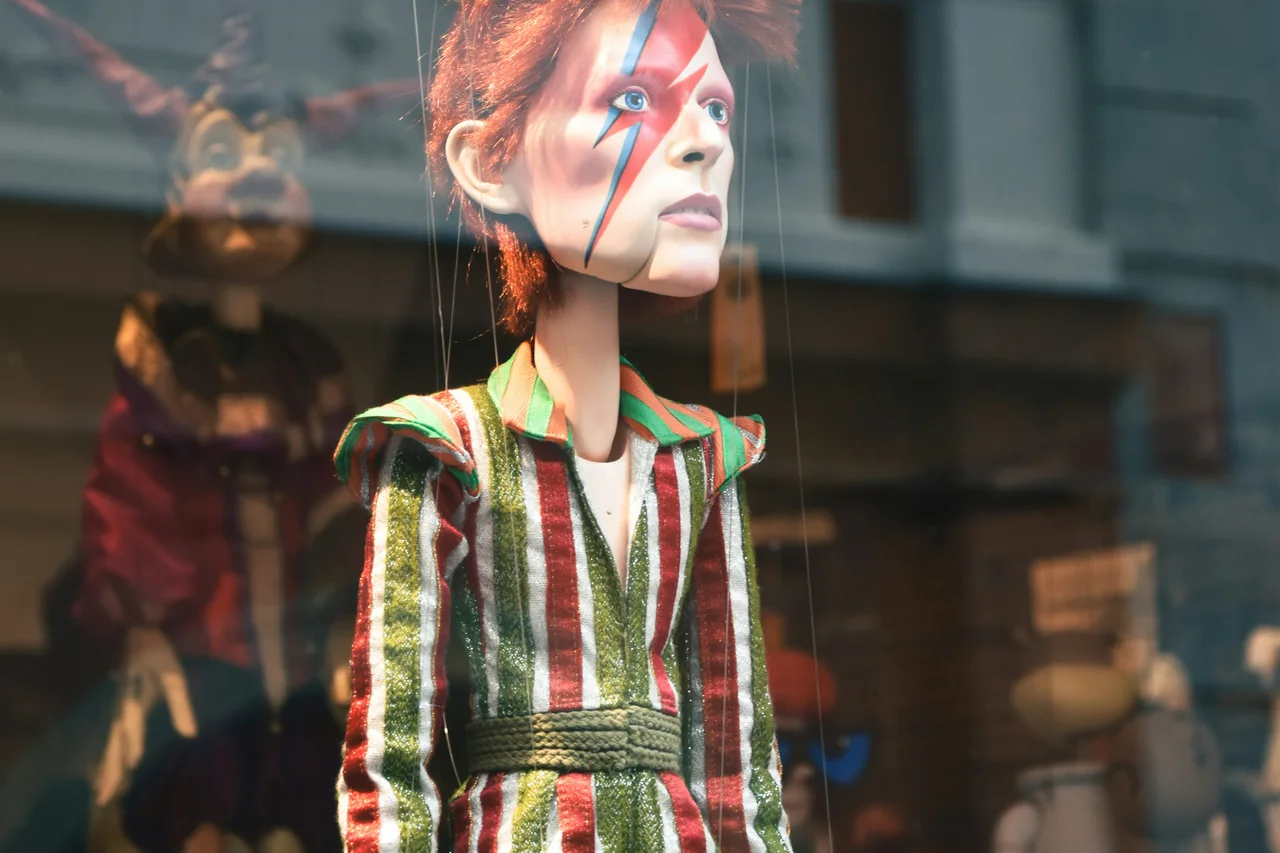
                        <img src="https://demo.getpublii.eu/themes/blogmere/media/posts/8/style.webp" alt="A red-haired woman reflected in a city shop window" />
                    A wardrobe contains more information than a mood board. The shirt with softened cuffs, the jacket always left near the door and the shoes that never quite make it out of their box all record decisions made on ordinary mornings. Start there before making a&hellip;
                ]]>
            </summary>
        <content type="html">
            <![CDATA[
                    <p><img src="https://demo.getpublii.eu/themes/blogmere/media/posts/8/style.webp" class="type:primaryImage" alt="A red-haired woman reflected in a city shop window" /></p>
                <p>A wardrobe contains more information than a mood board. The shirt with softened cuffs, the jacket always left near the door and the shoes that never quite make it out of their box all record decisions made on ordinary mornings. Start there before making a list of things to buy.</p>

<p>Try laying out three outfits you actually wear. Notice what they have in common: the fit at the shoulders, a particular length of sleeve, or colours that sit comfortably together. The details may be less dramatic than the styles you save online, but they have already proved useful.</p>

<h2>Work with a familiar piece</h2>

<p>Build one outfit around something you like wearing. Change only one part at a time so you can see what makes a difference. Rolling a cuff or choosing a different shoe may change the balance more than adding another item.</p>

<figure class="post__image">
    <img loading="lazy"         src="https://demo.getpublii.eu/themes/blogmere/media/posts/8/portrait-light-1920.webp"
        alt="A woman in white with a flowing pink scarf photographed from below"
        width="1920"
        height="1280"
     sizes="(min-width: 1200px) 790px, 83vw" srcset="https://demo.getpublii.eu/themes/blogmere/media/posts/8/responsive/portrait-light-1920-480.webp 480w ,https://demo.getpublii.eu/themes/blogmere/media/posts/8/responsive/portrait-light-1920-640.webp 640w ,https://demo.getpublii.eu/themes/blogmere/media/posts/8/responsive/portrait-light-1920-960.webp 960w ,https://demo.getpublii.eu/themes/blogmere/media/posts/8/responsive/portrait-light-1920-1280.webp 1280w ,https://demo.getpublii.eu/themes/blogmere/media/posts/8/responsive/portrait-light-1920-1600.webp 1600w ,https://demo.getpublii.eu/themes/blogmere/media/posts/8/responsive/portrait-light-1920-1920.webp 1920w">
    <figcaption>A pale dress and a loose scarf give the wind something to move.</figcaption>
</figure>

<p>A mirror shows one view, while a photograph can reveal another. Take a quick picture in ordinary light if it helps, then look at the whole shape rather than inspecting every small detail. Clothes have to work while you move, sit down and carry things.</p>

<h2>Make room for repetition</h2>

<p>Wearing a combination again is useful information. It tells you that the clothes fit the life you are having, not just the occasion you imagined when you bought them. Keep a note of combinations that make getting dressed straightforward.</p>

<p>When something stays unworn, be specific about the reason. A colour may be right while the fabric feels wrong. A beautiful coat may be awkward on your usual journey. That distinction is more useful than deciding you simply need more confidence.</p>

<p>The next purchase, if there is one, should answer a real gap. It is easier to choose well when you can name the outfit it will belong to.</p>
            ]]>
        </content>
    </entry>
    <entry>
        <title>The pleasure of starting to paint</title>
        <author>
            <name>Jane Doe</name>
        </author>
        <link href="https://demo.getpublii.eu/themes/blogmere/stories/the-pleasure-of-starting-to-paint/"/>
        <id>https://demo.getpublii.eu/themes/blogmere/stories/the-pleasure-of-starting-to-paint/</id>
        <media:content url="https://demo.getpublii.eu/themes/blogmere/media/posts/7/painting.webp" medium="image" />

        <updated>2026-09-09T02:00:00+02:00</updated>
            <summary type="html">
                <![CDATA[
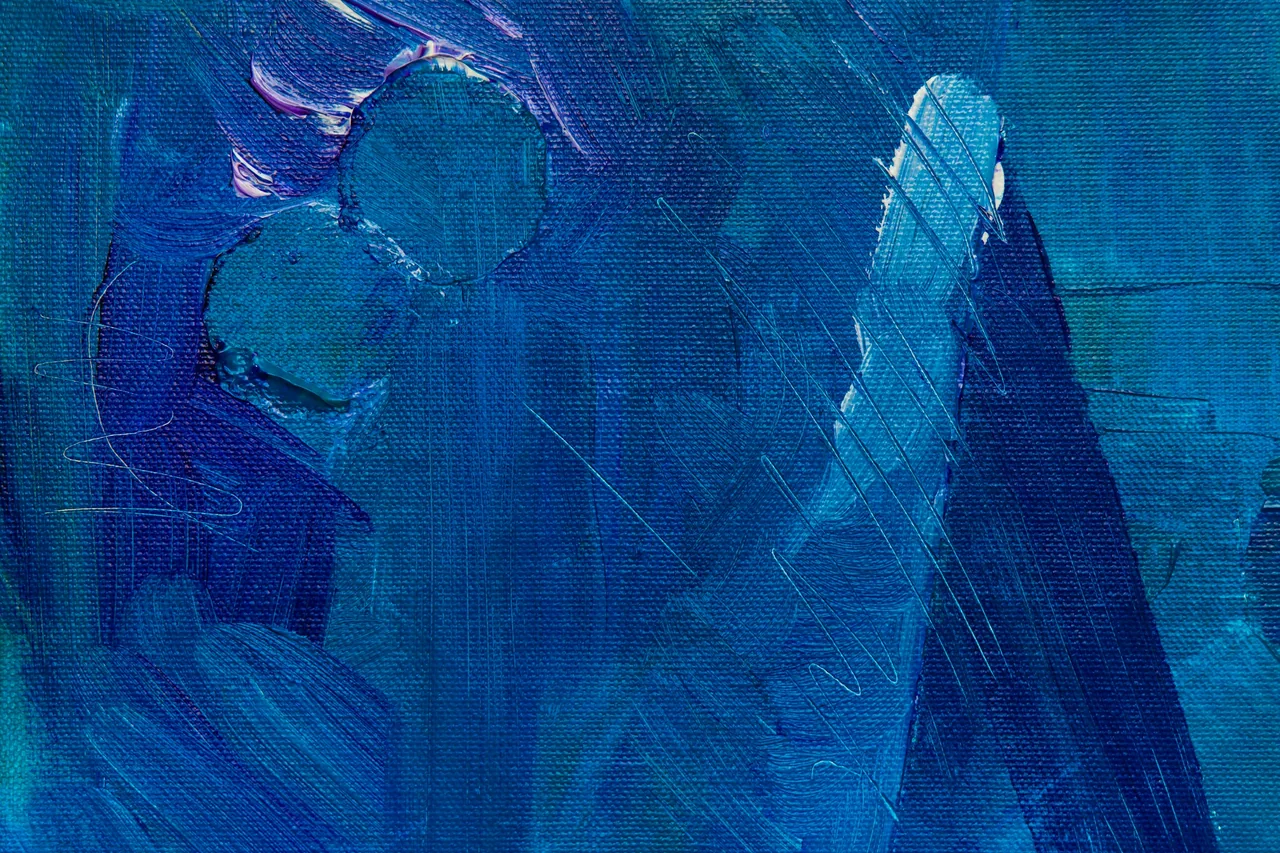
                        <img src="https://demo.getpublii.eu/themes/blogmere/media/posts/7/painting.webp" alt="Overlapping brushstrokes in deep and pale blue paint" />
                    Put a piece of fruit on the table, or use the mug that is already there. A familiar object is a useful beginning because you can spend your attention on the marks rather than searching for a subject worthy of painting. Ordinary things tolerate being&hellip;
                ]]>
            </summary>
        <content type="html">
            <![CDATA[
                    <p><img src="https://demo.getpublii.eu/themes/blogmere/media/posts/7/painting.webp" class="type:primaryImage" alt="Overlapping brushstrokes in deep and pale blue paint" /></p>
                <p>Put a piece of fruit on the table, or use the mug that is already there. A familiar object is a useful beginning because you can spend your attention on the marks rather than searching for a subject worthy of painting. Ordinary things tolerate being painted badly.</p>

<p>Choose a few colours and a sheet you are willing to use up. An expensive surface can make every decision feel permanent. Small studies leave room to find out what happens when two colours meet or when a brush carries more water than you intended.</p>

<h2>Begin with the largest shape</h2>

<p>Look for the broad patches before the details. Where does the object end and its shadow begin? Which part is lightest? A few loose shapes can tell you more about those relationships than an early attempt to draw every edge accurately.</p>

<figure class="post__image">
    <img loading="lazy"         src="https://demo.getpublii.eu/themes/blogmere/media/posts/7/slider-autumn-blur-1280.webp"
        alt="An abstract photograph of pale tree trunks and orange leaves blurred by movement"
        width="1280"
        height="1280"
     sizes="(min-width: 1200px) 790px, 83vw" srcset="https://demo.getpublii.eu/themes/blogmere/media/posts/7/responsive/slider-autumn-blur-1280-480.webp 480w ,https://demo.getpublii.eu/themes/blogmere/media/posts/7/responsive/slider-autumn-blur-1280-640.webp 640w ,https://demo.getpublii.eu/themes/blogmere/media/posts/7/responsive/slider-autumn-blur-1280-960.webp 960w ,https://demo.getpublii.eu/themes/blogmere/media/posts/7/responsive/slider-autumn-blur-1280-1280.webp 1280w ,https://demo.getpublii.eu/themes/blogmere/media/posts/7/responsive/slider-autumn-blur-1280-1600.webp 1600w ,https://demo.getpublii.eu/themes/blogmere/media/posts/7/responsive/slider-autumn-blur-1280-1920.webp 1920w">
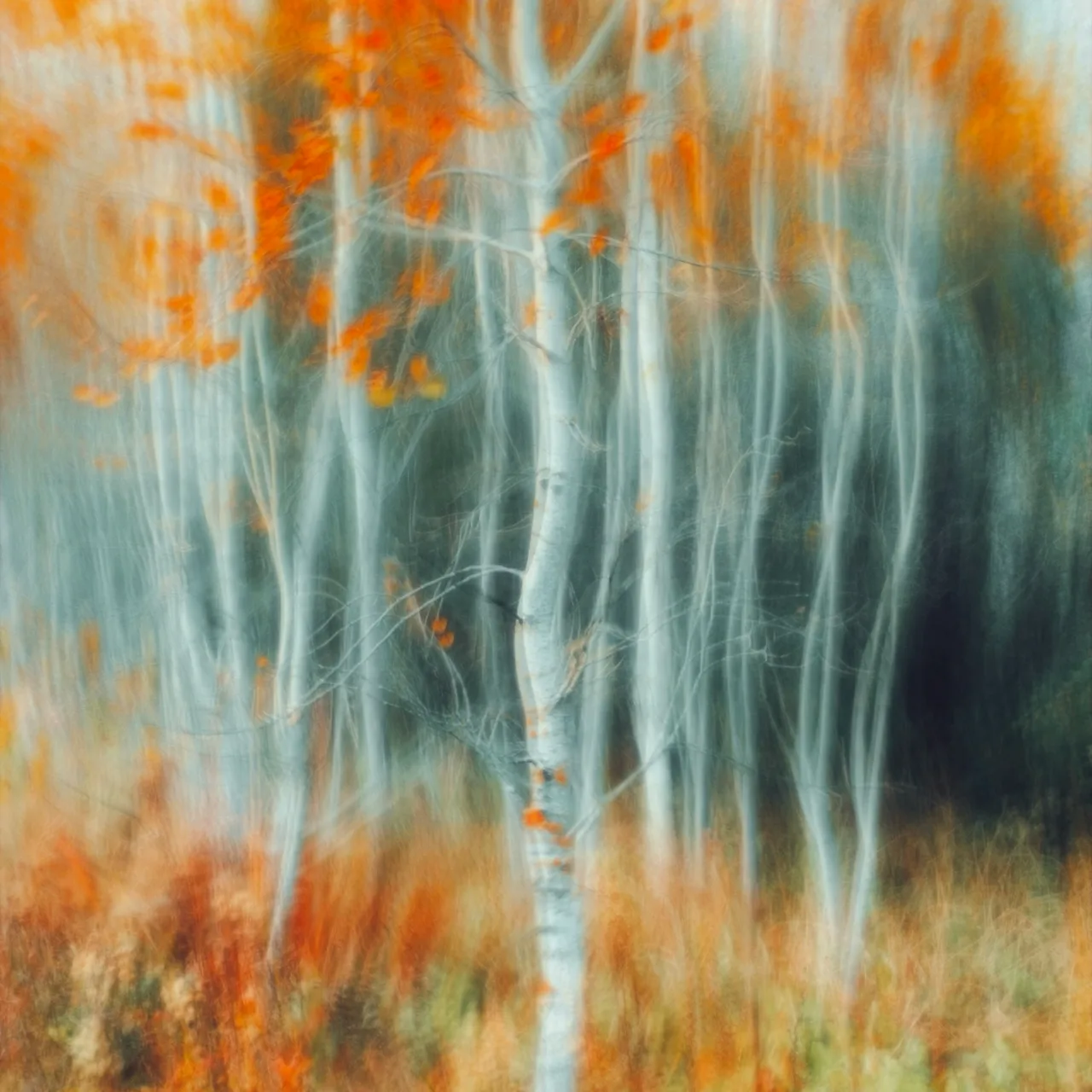
    <figcaption>Orange leaves and pale trunks reduced to bands of colour.</figcaption>
</figure>

<p>The blurred woodland photograph offers a useful way to think about this. You can recognize the feeling of trees without counting branches. A painting can also leave some things unresolved and still be specific about colour, direction and light.</p>

<p>If a passage becomes muddy, put the sheet aside for a while. Starting a second small version can be more useful than repeatedly working the same spot. You have already learned something about the arrangement, even if the first attempt looks uncertain.</p>

<h2>Keep the early sheets</h2>

<p>Write the date on the back and keep a few experiments together. They make an honest record of the decisions you were trying to understand. A patch of colour that seemed unsuccessful in one painting might suggest the beginning of another.</p>

<p>Leave the materials somewhere easy to reach if you can. The next session is more likely to happen when it begins with filling a jar of water instead of searching the cupboard for every brush. End by choosing what you would like to paint next.</p>
            ]]>
        </content>
    </entry>
</feed>