A different way to move
Looking at the spaces around a body can reveal as much as looking at the body itself.
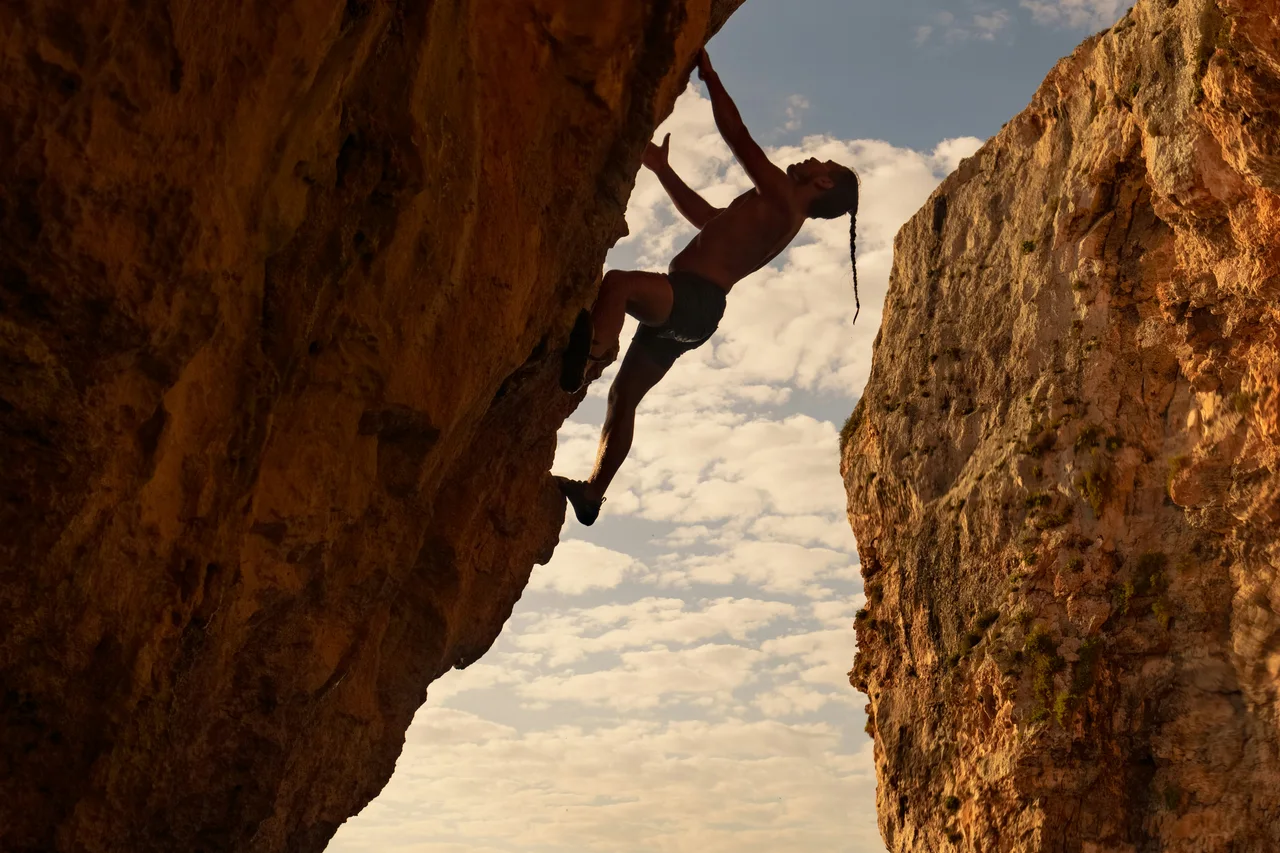
The climber is a dark shape between two faces of rock. The space around the figure carries the photograph: a wedge of sky, an outstretched leg and the uneven edges of stone. You do not need to see a face to understand that the body is negotiating its position.
Photographs of movement can become preoccupied with the instant when something impressive happens. This frame leaves room for another kind of attention. The shape is interesting before you know what happened immediately before or after it.
Notice the empty spaces
Look at the gaps between an arm and a torso, or between a shoe and the ground. These small areas can make a gesture readable. In a crowded photograph, they are often the first things to disappear.
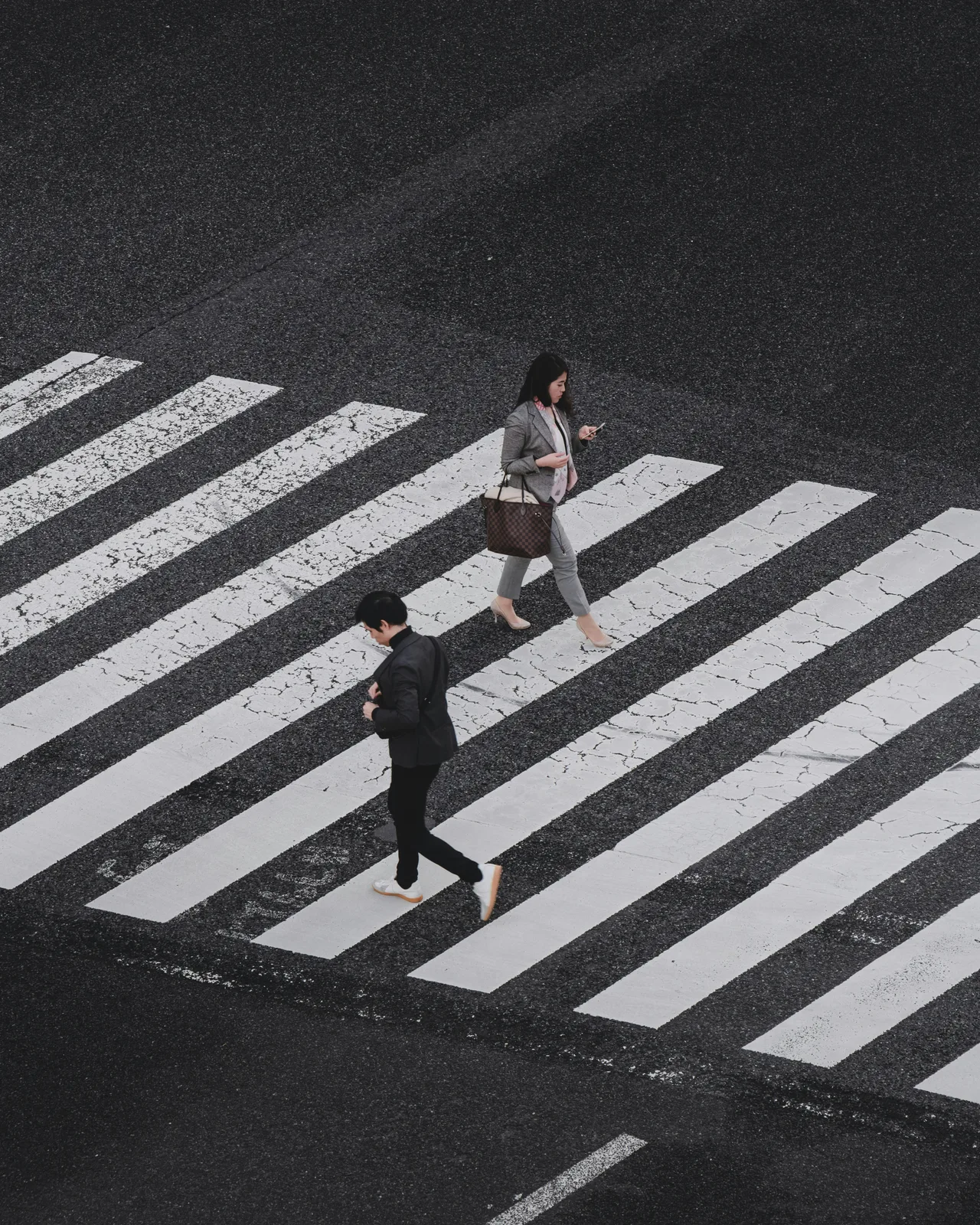
The same idea works on an ordinary street. People crossing a broad stripe of paint briefly form separate shapes, then overlap and become harder to distinguish. A frame taken slightly earlier or later can feel surprisingly different even though the scene has barely changed.
Give moving subjects room in the direction they appear to be going. It is a useful starting point, though occasionally a tighter edge can create the tension a picture needs. The choice becomes more deliberate when you compare both versions.
Choose the gesture you can read
When reviewing a sequence, look beyond sharpness for a moment. Which frame explains the movement most clearly? A technically clean image may still catch an awkward overlap, while another gives each part of the body enough space.
Keep the photograph that lets you understand the gesture without a long explanation. A caption can add context, but it should not have to repair a shape that the frame has made difficult to see.