Following the shade through a colonnade
Repeated columns turn a short passage into a study of distance, light and a single bright figure.

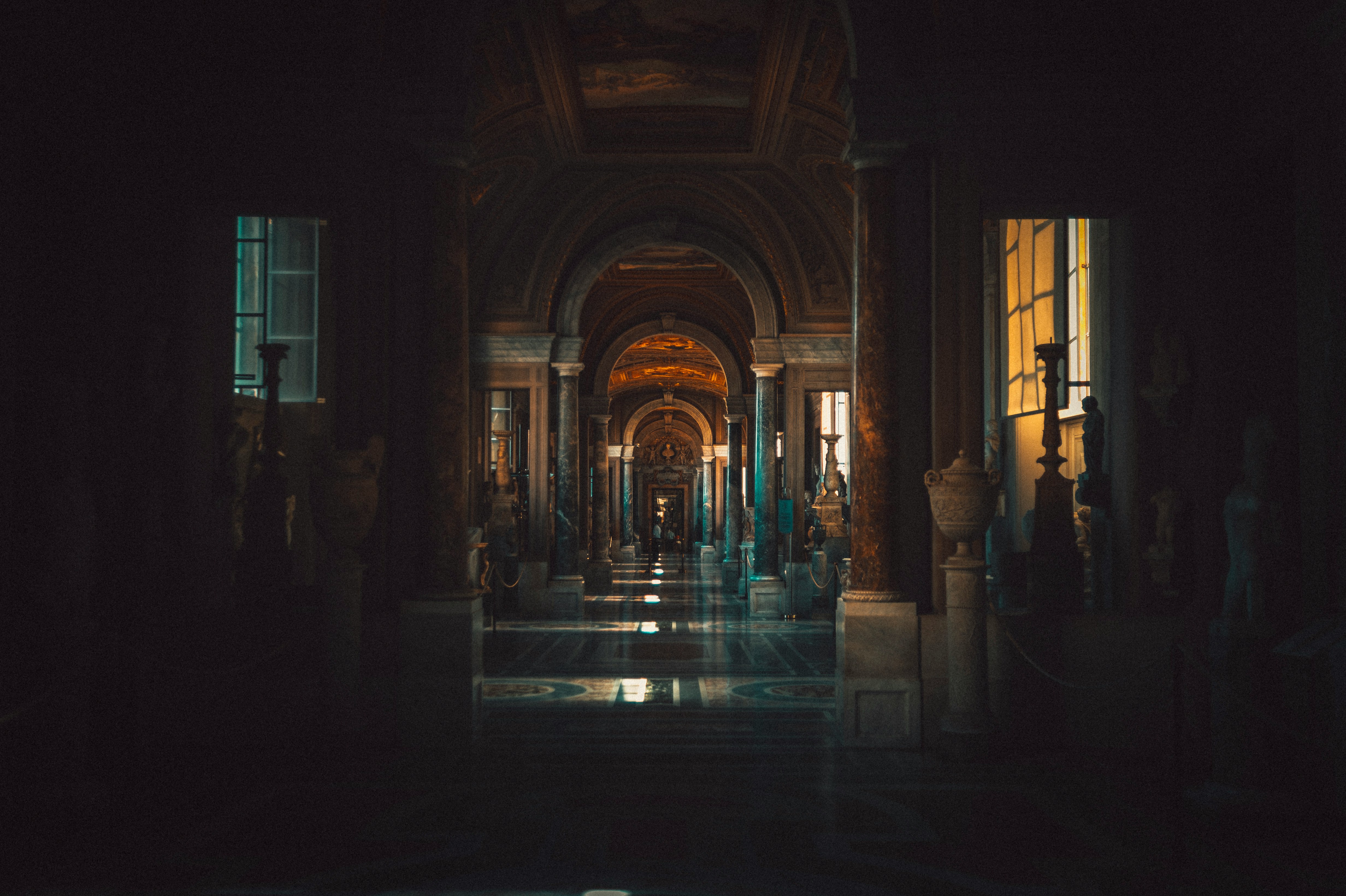
The columns do most of the organising. Each one repeats the last, leaving a narrow opening through which the next can be seen. Farther into the passage, the shapes become smaller and closer together. A figure in orange interrupts the pattern just enough to give it scale.
A place like this can seem to offer a finished composition before you lift the camera. Stand at one end, point along the corridor and the lines will lead somewhere. The more interesting decision is how much of that order to keep.
Move away from the exact centre
A small step to one side changes the rhythm. One row of columns may grow heavier while the other opens up. The passage can feel wider, darker or less symmetrical without anything in it moving at all.
Try a few positions before settling on one. Pay attention to the opening at the far end as well as to the nearest column. If the distant light becomes too dominant, a slight change in angle can give the foreground more weight.
Leave enough room in the plan for the photograph to surprise both of you.
The courtyard has fewer repeated lines, but it uses the same basic invitation: a darker edge opens onto something brighter. Plants soften the geometry, and the blue pots give the eye places to pause. Comparing the two spaces makes their different scales easier to feel.
Wait for the right amount of life
A person can help explain the size of a building without becoming the whole subject. Watch how the figure moves between light and shade. Clothing may briefly echo a colour in the stone, or stand apart from it, as the orange does here.
There is no need to ask a stranger to walk the passage again. If the moment has gone, work with the empty space or wait for a different arrangement. Architecture offers enough fixed information that an unplanned gesture can make the picture feel less predetermined.
Before leaving, make one frame that includes something imperfect: a worn edge, a patch of uneven colour or the way the paving meets a column. Repetition gives the passage its structure. Those smaller differences make it a place people have actually moved through.