A little room to breathe
A wide sky asks very little of the person standing beneath it.
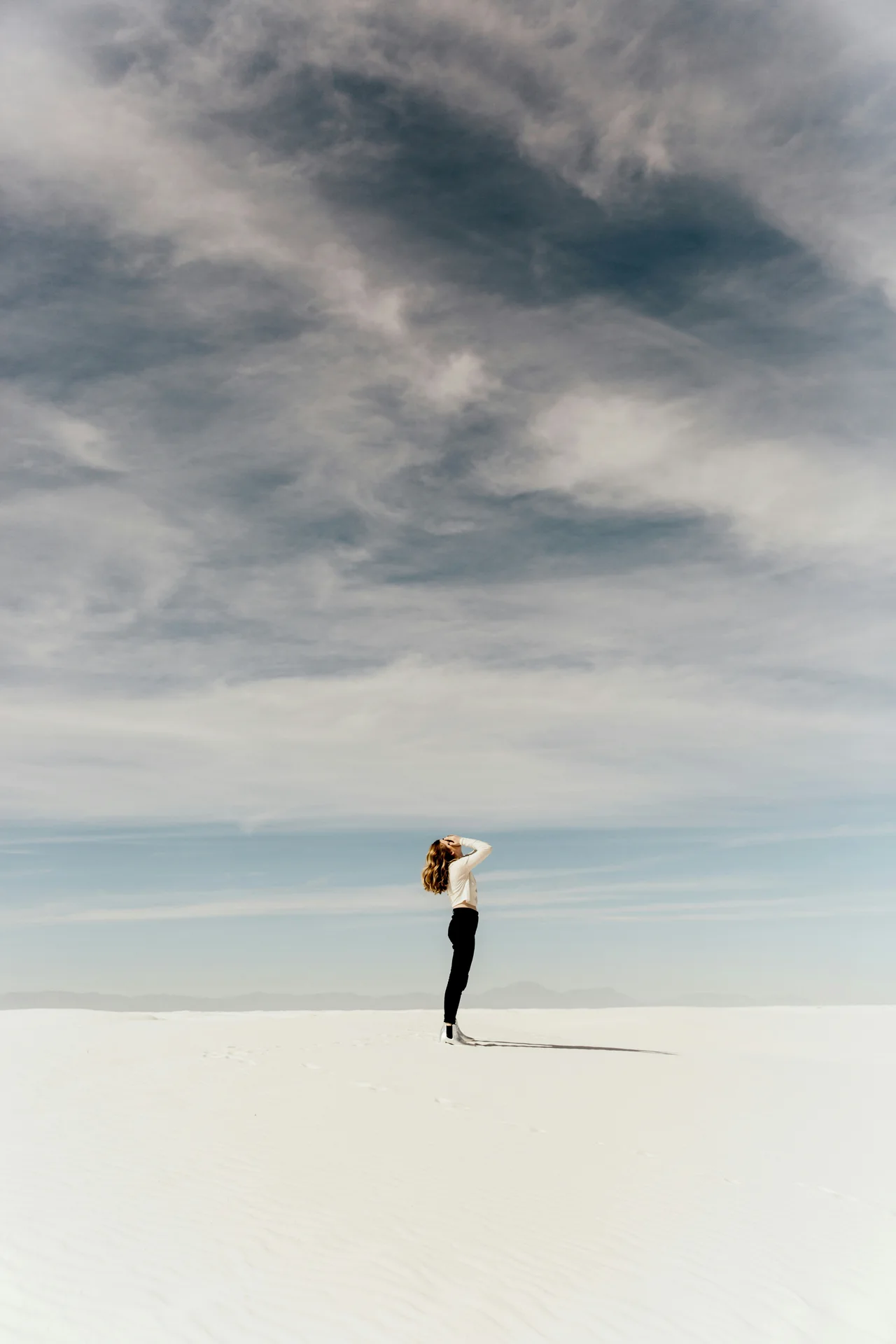
There is plenty of space in this photograph, but very little of it is empty. Clouds change the weight of the sky, a darker band holds the lower edge, and one small figure gives the whole view a human measure. The picture would feel different if that figure were closer.
Wide landscapes are useful reminders that the main subject does not always have to fill the frame. Distance can be expressive. It lets the surroundings remain active instead of reducing them to a backdrop.
At home, the equivalent might be a clear patch of table or a chair that is not surrounded by things waiting to be put away. A little unclaimed space changes how a room feels without requiring the entire room to be reorganized.
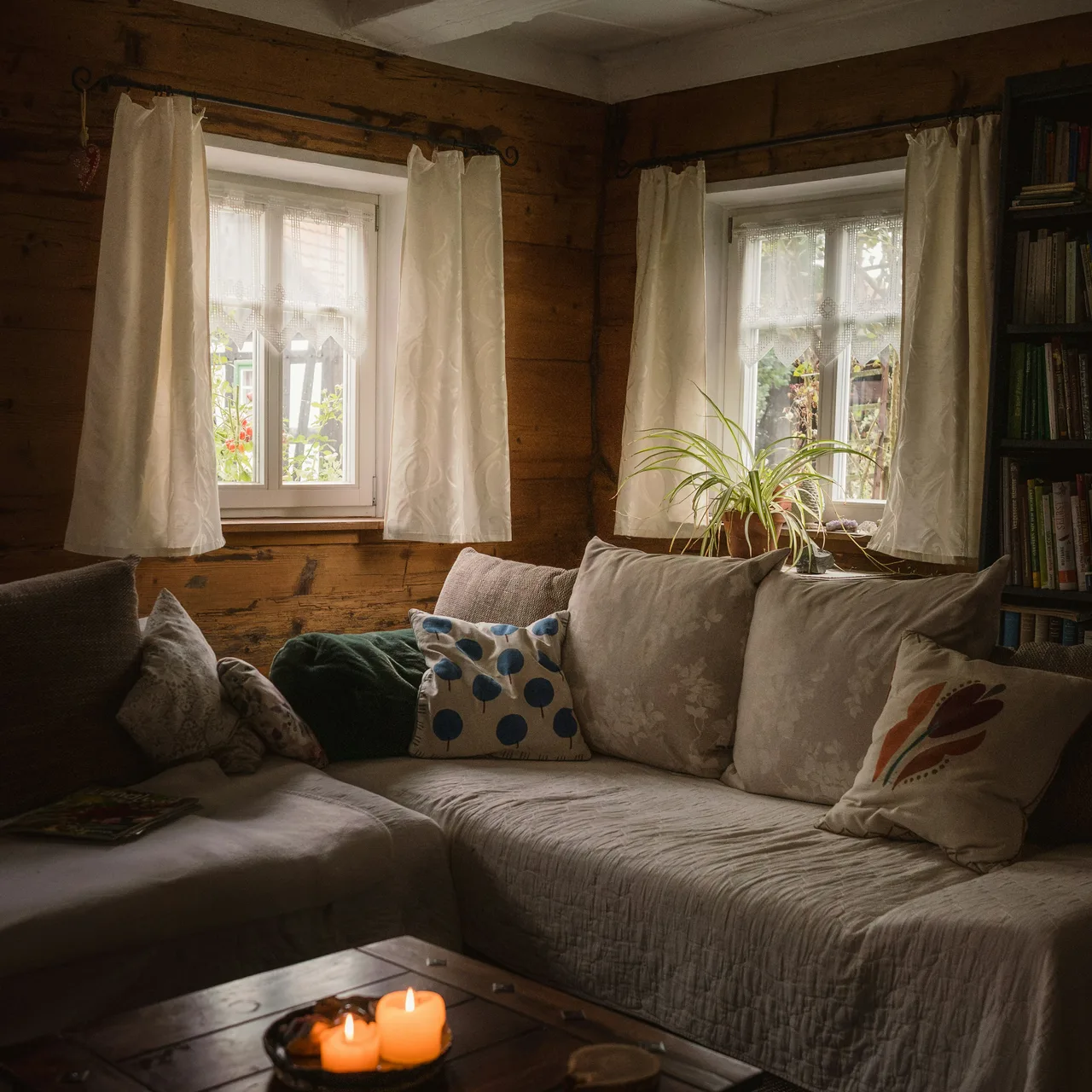
Clear one useful space
Choose a place you use every day. Move the objects that have arrived there by accident, then put back the ones that belong. It helps to be specific: a bedside table needs room for a glass and a book; a kitchen corner may need space for a chopping board.
Leave the result alone for a few days before adding anything decorative. You may discover that the spare surface is already doing enough. If something is missing, the way you use the space will usually make that clearer than another photograph of someone else's room.
A room can still contain books, coats and the evidence of an ordinary week. The point is to create one place that works comfortably among those things. Perfection makes a poor household routine.
Return to the landscape after looking at the room. Both pictures offer somewhere for the eye to settle, and both keep a small human presence in proportion to the space around it.