A little patience, a better picture
A portrait begins with the person in front of the camera, and a little room to settle in.
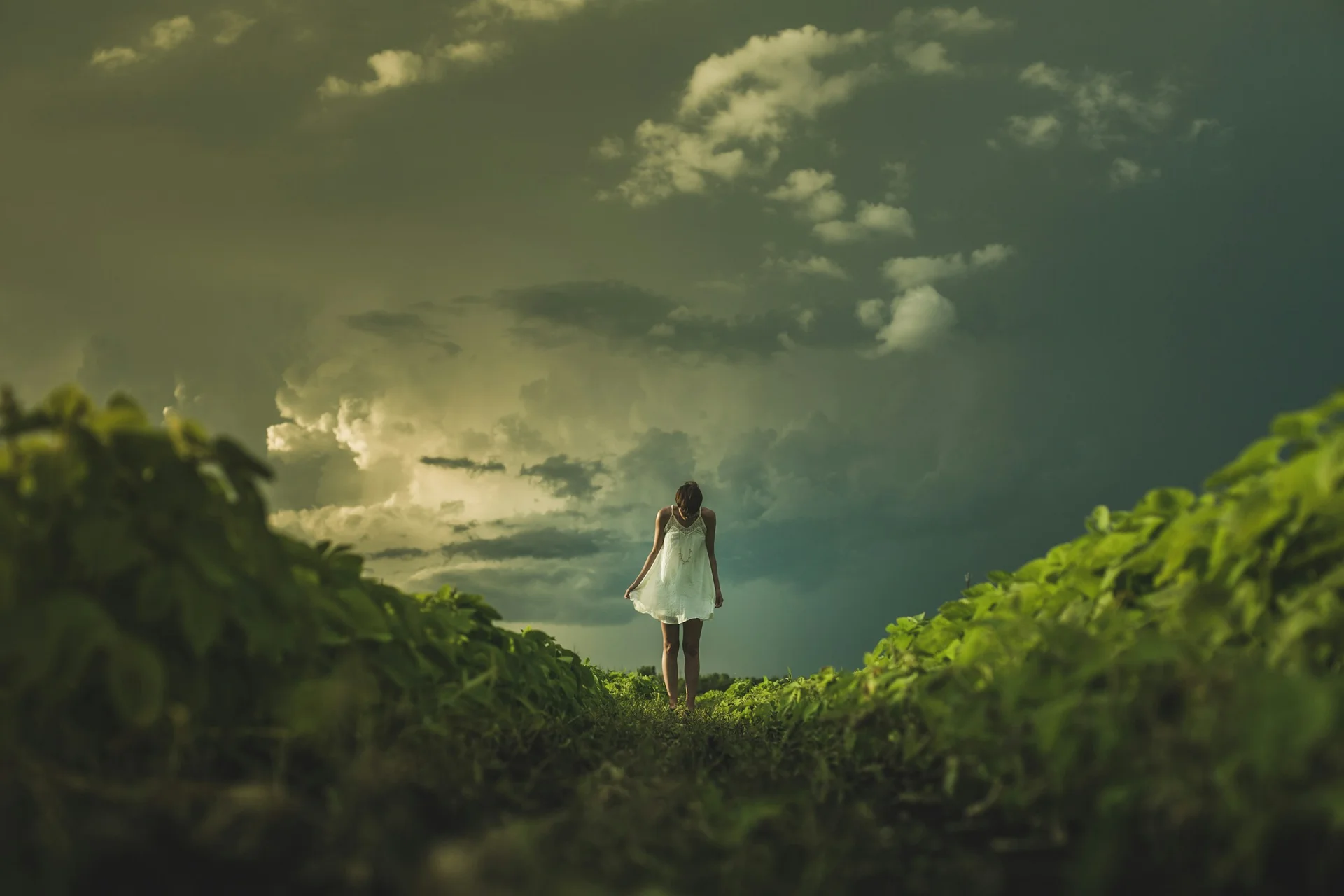
A hillside gives a portrait plenty of space. There is sky above the figure, a line of land below and very little to explain where the eye should go. The white dress picks up the light without needing to compete with a busy background.
A simple setting does not make the photograph automatic. It makes the small decisions more visible: how far away to stand, where to place the horizon and whether the person feels comfortable enough to stop thinking about the camera.
Begin with a conversation
Explain the picture you have in mind in ordinary terms. Show the frame on the screen if that helps. Someone who understands why you are standing a particular distance away can contribute to the image rather than waiting for a series of instructions.
Make a few photographs before trying to perfect a pose. The first frames give both of you something to respond to. A hand may look tense, the wind may be catching a sleeve, or a slight turn may make the whole arrangement feel easier.
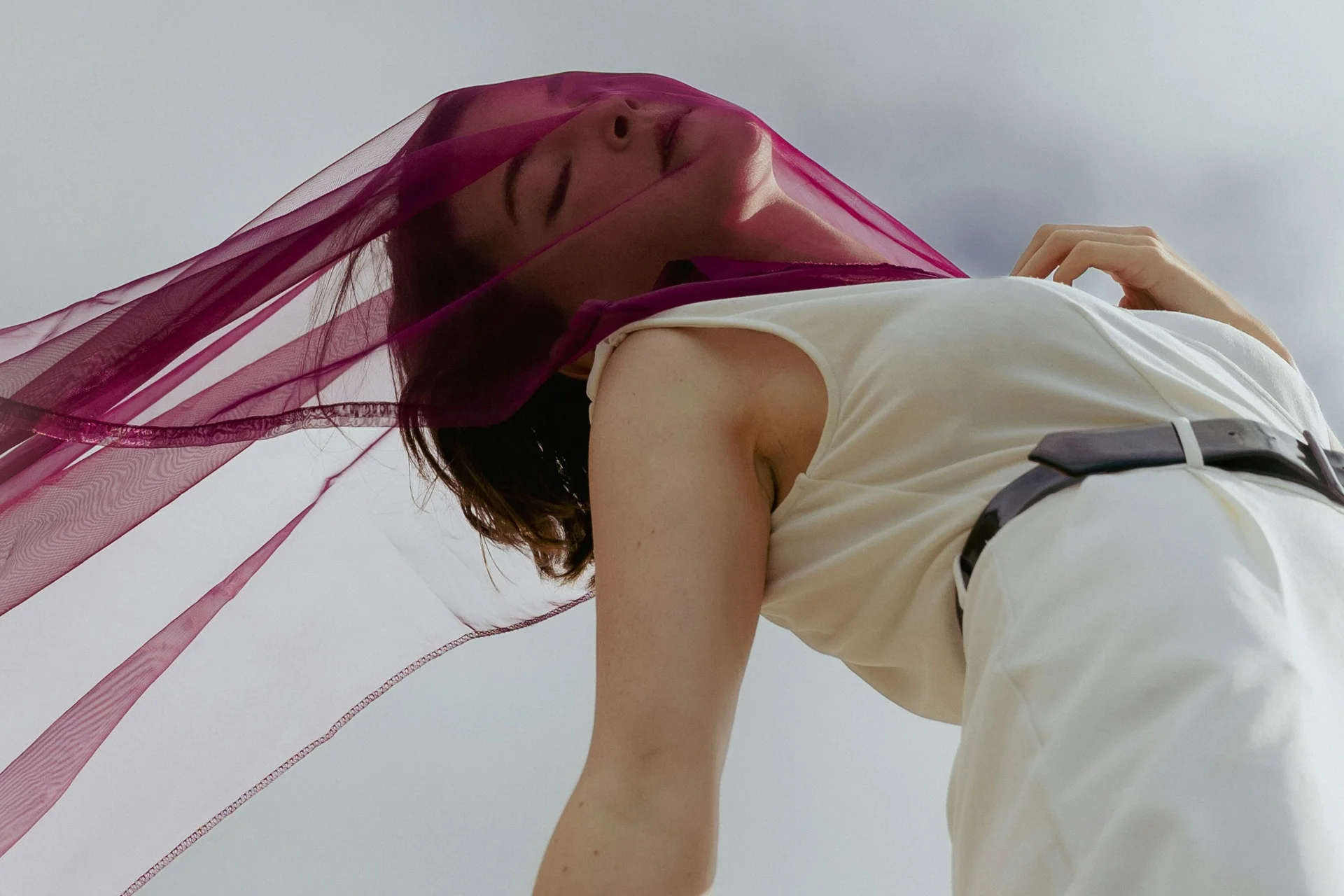
The second photograph uses cloth to change the outline of the figure. Its energy comes partly from what cannot be held still. You can plan the relationship between the person and the sky, then let a little movement decide the rest.
Give the person time to become part of the place before asking the picture to be finished.
Look beyond the expression
A portrait is carried by more than a face. Shoulders, hands and the way someone stands on uneven ground all contribute to it. If the expression is relaxed but the rest of the body looks uncomfortable, take a break rather than adding more directions.
Step back and check the edges of the frame. A horizon crossing at an awkward point or a bright object near the border can distract from a good moment. Often a small change in your own position is easier than asking the person to move again.
When choosing the final image, keep a few that differ in mood instead of selecting only the most technically tidy frame. Share the shortlist with the person you photographed. They may recognise something in a quieter picture that you overlooked.
Patience does not have to mean a long session. It means allowing enough time for an ordinary exchange, a few adjustments and a moment when neither person is rushing to finish.