A room for doing very little
On choosing a seat, leaving the afternoon open and letting a room be enough.
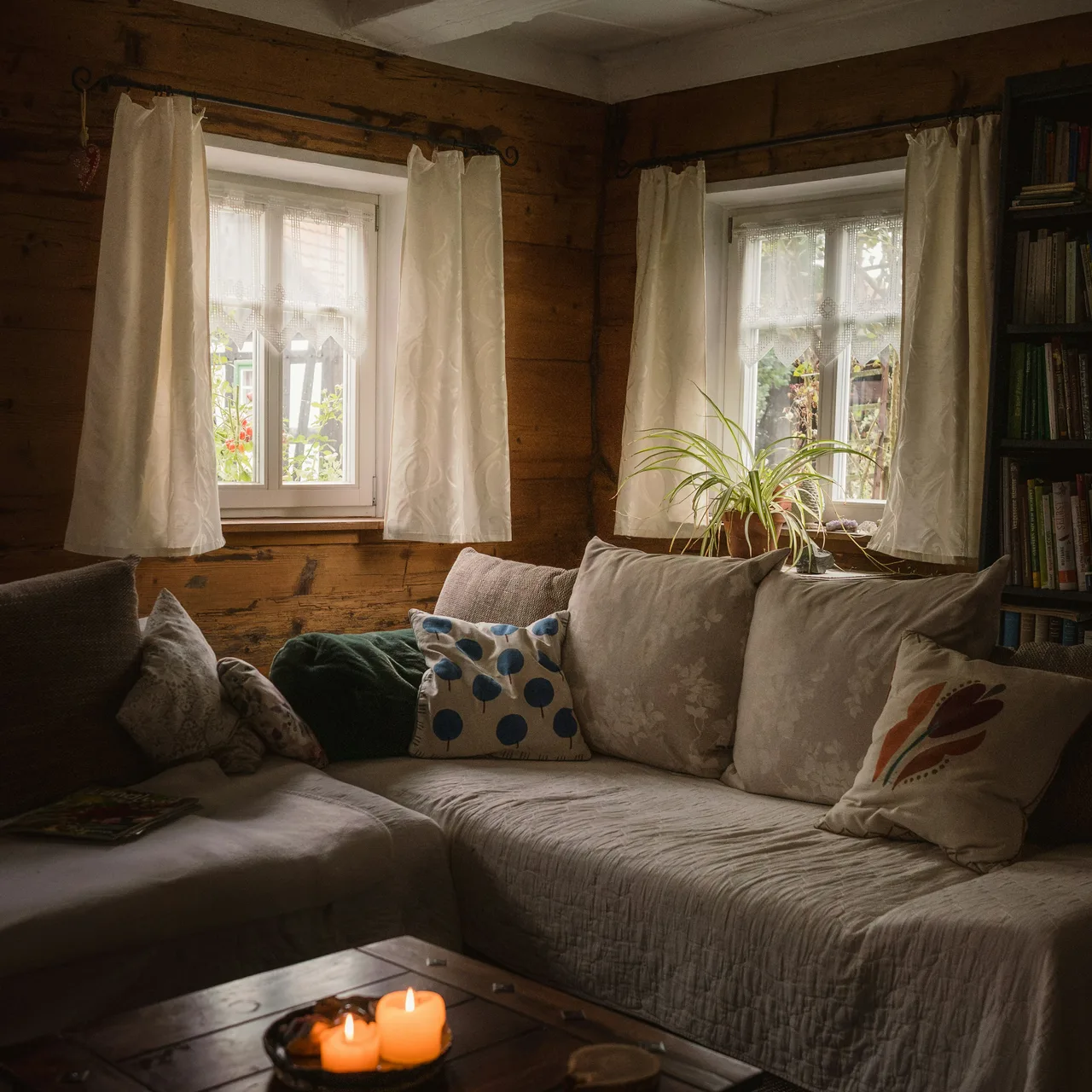
The sofa faces into a small wooden room. There are windows on two sides, a place to put a cup and very little that demands attention. It is the sort of space that makes an elaborate plan for the afternoon feel unnecessary.
Rest can acquire a surprising amount of administration. We choose the right book, make a playlist, arrange a drink and decide how long we ought to stay away from a screen. By the time everything is ready, doing very little has become another project with several parts.
A comfortable seat is a reasonable place to stop preparing.
Let the room set the pace
Take a moment to find out what is already there. Light moves across the timber. A sound arrives from beyond a window. The temperature changes slightly when a cloud passes. These are small things, but they give an otherwise empty stretch of time some shape.
An open afternoon does not need to prove that it was well spent.
A book can stay closed beside you for a while. So can a notebook. Having them within reach is different from making a promise to use them. If you fall asleep after a few pages, the afternoon has not gone wrong.

Leave something unfinished
There will usually be a task available if you go looking for one. A message to answer, a drawer to sort, a plan to improve. Choosing to leave it until later can feel more deliberate than filling the whole afternoon with approved forms of relaxation.
Before you get up, notice whether you want another ten minutes. If the answer is yes and the day allows it, stay. The room was comfortable enough before you decided what to do in it.