Before the world wakes up
An orange balloon briefly becomes its own source of light.
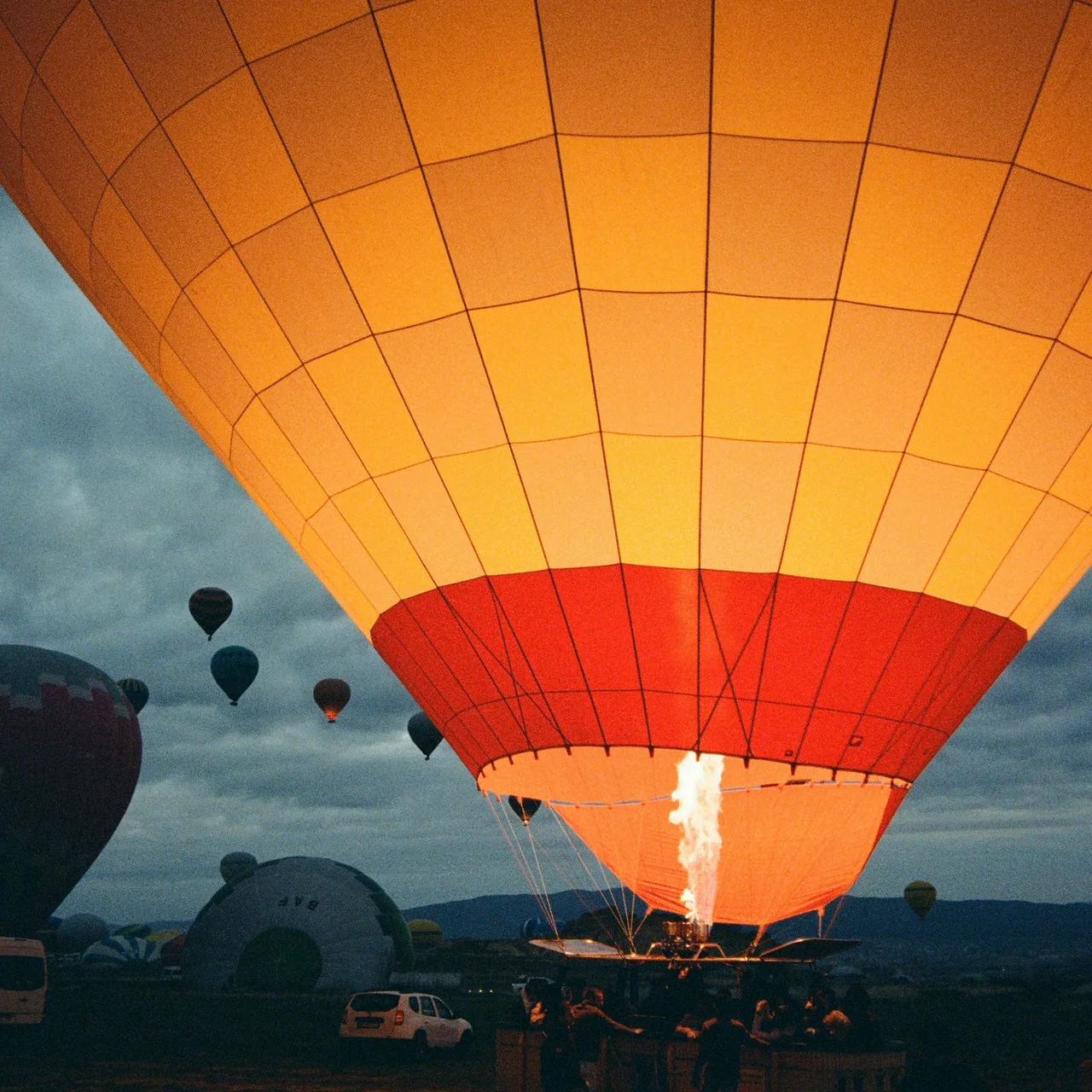
The burner lights the fabric from within, turning the balloon into a bright shape against a darker morning. For a moment the colour feels almost detached from the rest of the scene. Then the light changes and the material becomes ordinary fabric again.
Photographs like this depend on a temporary relationship. The subject is bright because the surroundings have not caught up with it yet. A little later, the same colour might still be beautiful but no longer hold the frame in quite the same way.
Find the colour first
Early light can make modest colours unusually clear. A painted door, a delivery cart or the inside of an open shop may become the strongest part of a street before daylight fills the spaces around it. Look for a colour that separates naturally from its background.
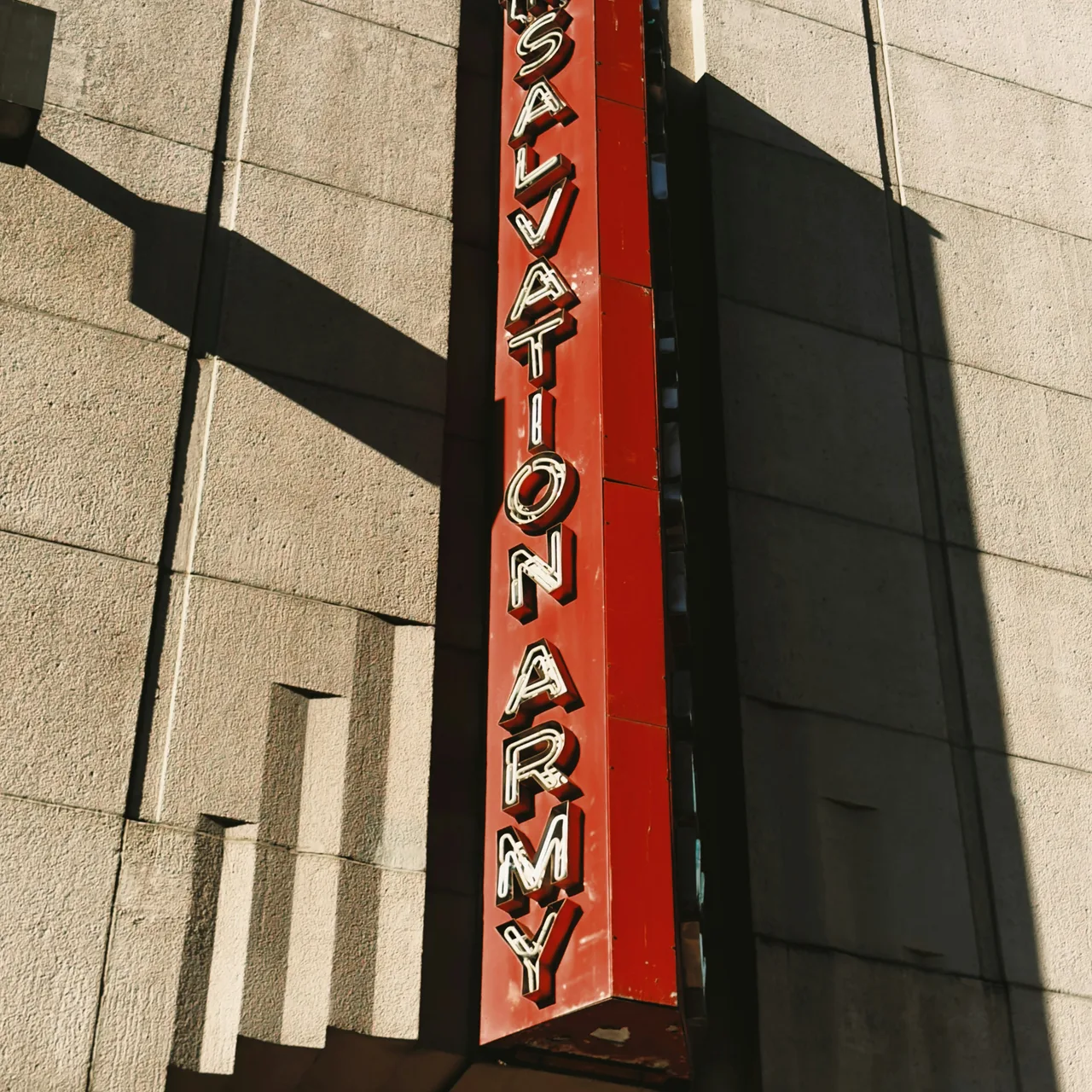
The sign in the second picture works by contrast too, although the conditions are different. Here the wall is bright and the shadow is sharply drawn. Comparing the two is a useful way to see how much the surrounding light contributes to a colour's character.
The same colour can tell a different story when the light around it changes.
You do not need a grand subject to try this. Photograph a familiar place at two times of day and put the images beside each other. Pay attention to which details become obvious and which almost disappear.
Keep the pair even if one image is clearly stronger. The weaker frame helps explain what the better one has gained. Over time, that comparison can become a more useful guide than a collection of isolated photographs taken only when everything looked immediately attractive.
The next time you find a colour that stops you, look around it before moving closer. The quieter parts of the frame may be doing more work than you first noticed.