Letting the picture blur
An imperfect photograph can remember something a sharp one leaves out.
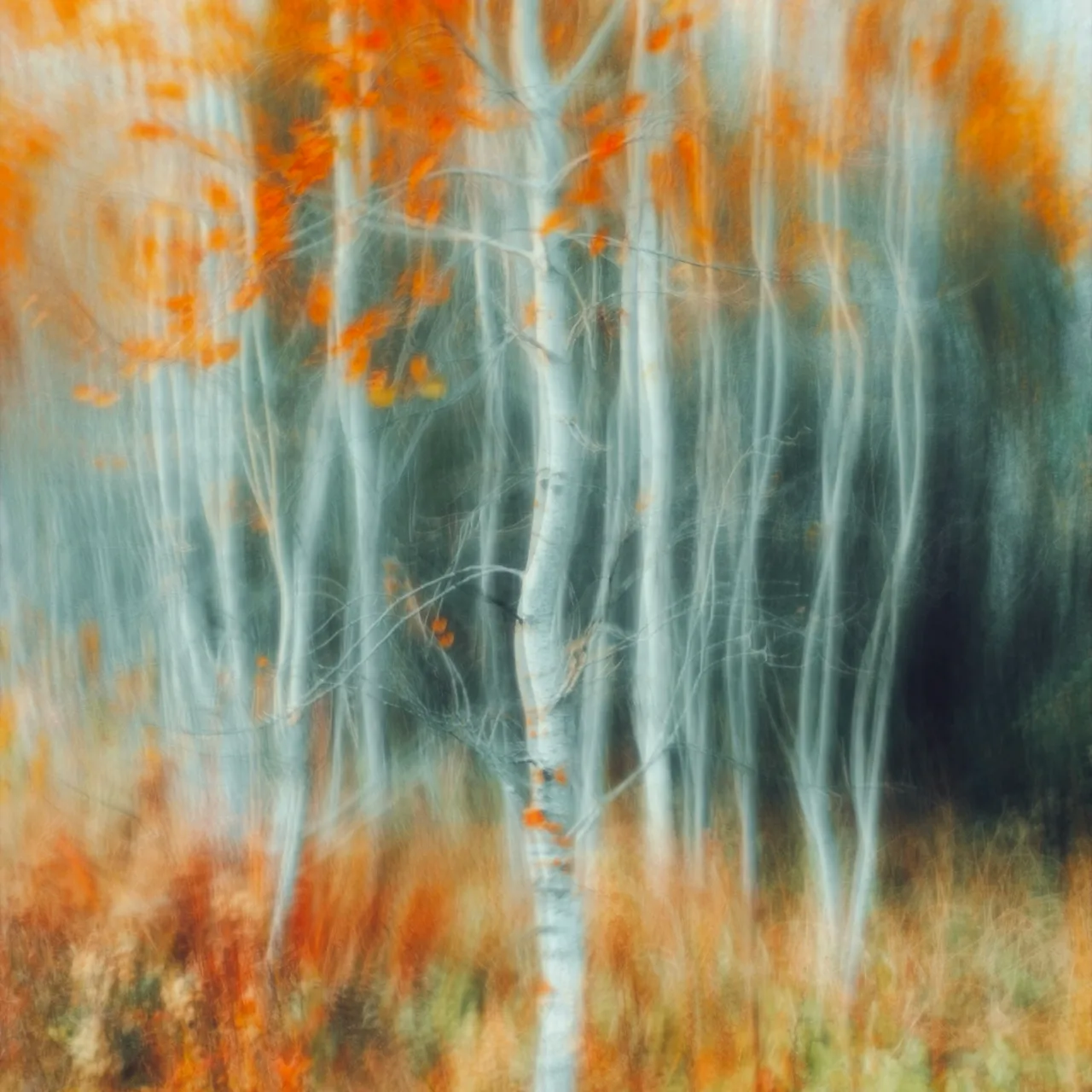
A blurred picture asks you to recognise a scene with less information. The trees become upright marks, leaves gather into patches of colour, and the space between them begins to matter more than the detail of any single branch.
Sometimes that happens by accident. A hand moves, a shutter stays open a little longer than expected, and the photograph comes back different from the view you thought you were keeping. Before deleting it, look at what remains.
Notice the part that still holds
A successful blurred image usually has something to organise it. That might be a strong colour, a clear direction or a small area that stays comparatively still. Without one of those, the picture can become difficult to read rather than pleasantly uncertain.
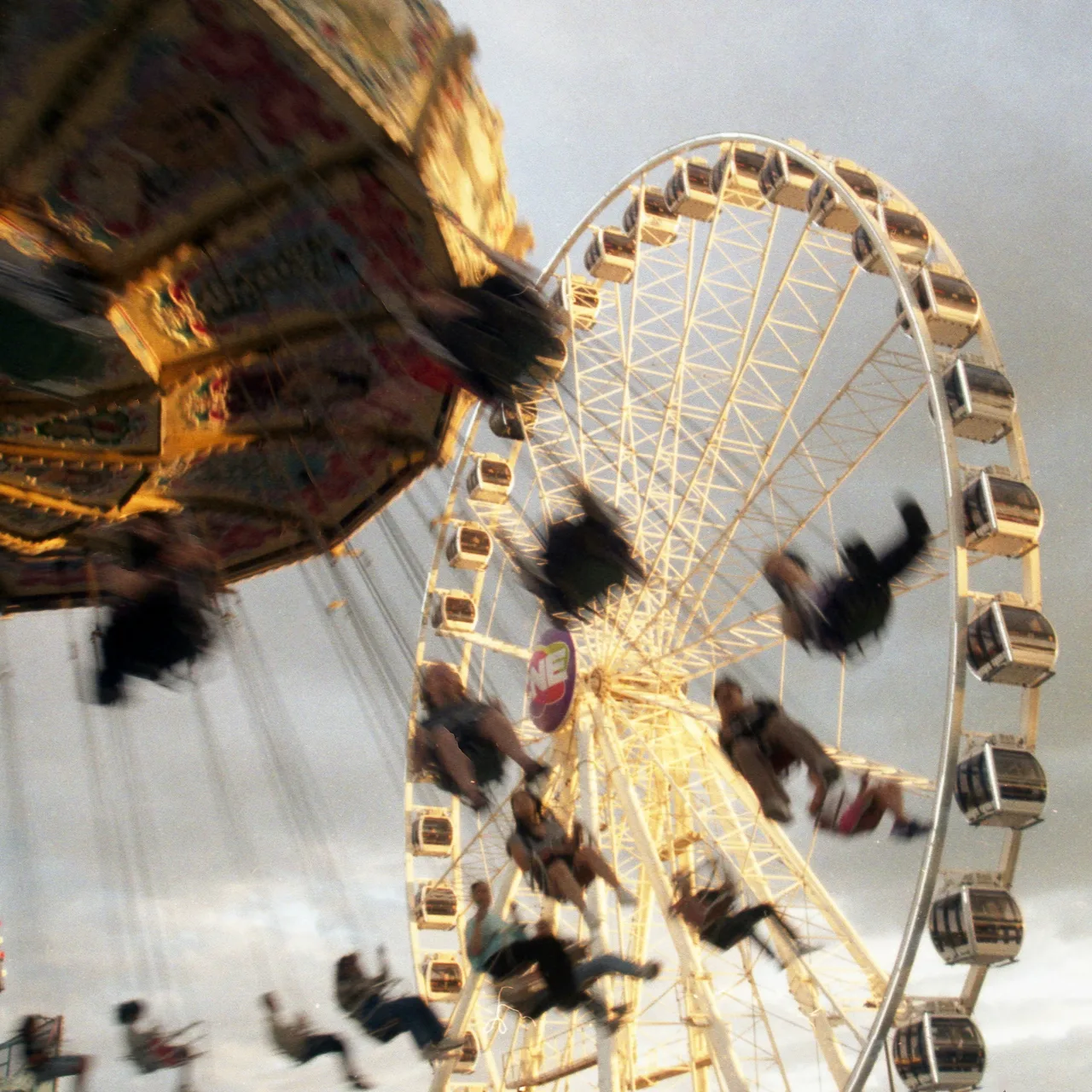
The fairground offers a useful comparison. Even as the ride blurs, the lights give the eye a route through the image. In the autumn trees, vertical trunks perform a similar job. The subject is softened, but its underlying arrangement remains.
Try a few frames with a gentle movement of the camera, then stop and look at them at a useful size. Tiny previews can make every accident seem interesting. A larger view helps you see which pictures have a convincing balance and which are simply unclear.
Keep the edit light at first. Strong contrast or extra saturation can make an uncertain image feel forced. The original colours may already carry enough energy.
There is room in a set of photographs for one image that does not explain itself immediately. Place it beside a clearer view and see whether the pair adds something. A little uncertainty can bring back the sensation of moving through a place, when a perfectly sharp record feels unexpectedly still.