Reading the afternoon shadows
A familiar wall can become a new arrangement as the sun changes direction.
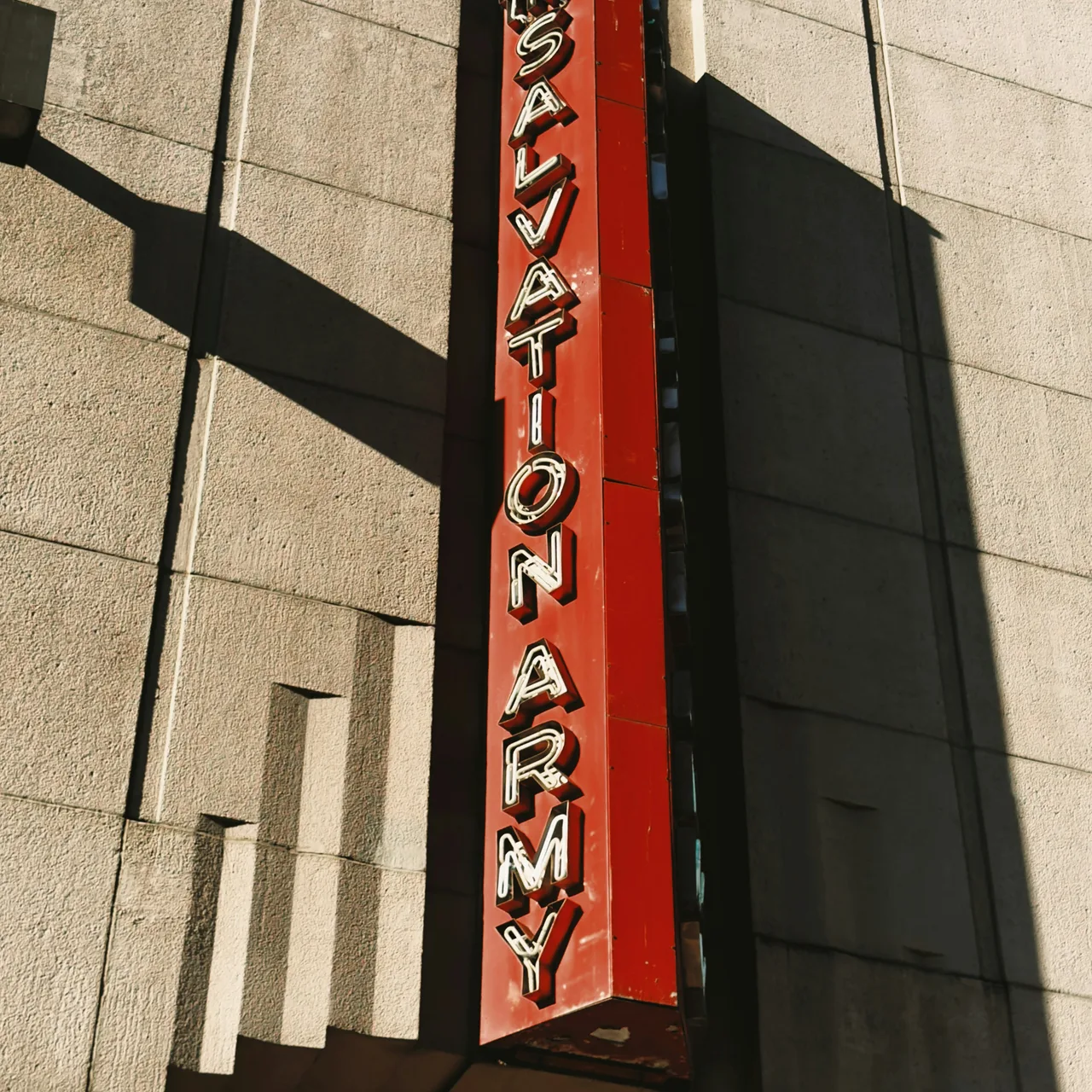
The red sign is the first thing you read. Then the shadow beside it begins to compete for attention. One is a fixed part of the building; the other will have changed by the time someone passes this way again.
Afternoon light can make a street feel newly arranged without adding anything to it. A projecting sign becomes a long shape. A window frame draws lines across a wall. A person stepping into the light briefly joins the pattern.
Follow the edge
The boundary between light and shade is often more useful than the brightest part of the scene. It gives you a line to place within the frame, and it can separate details that would otherwise run together. Try shifting your position until that edge has a clear relationship to the building.
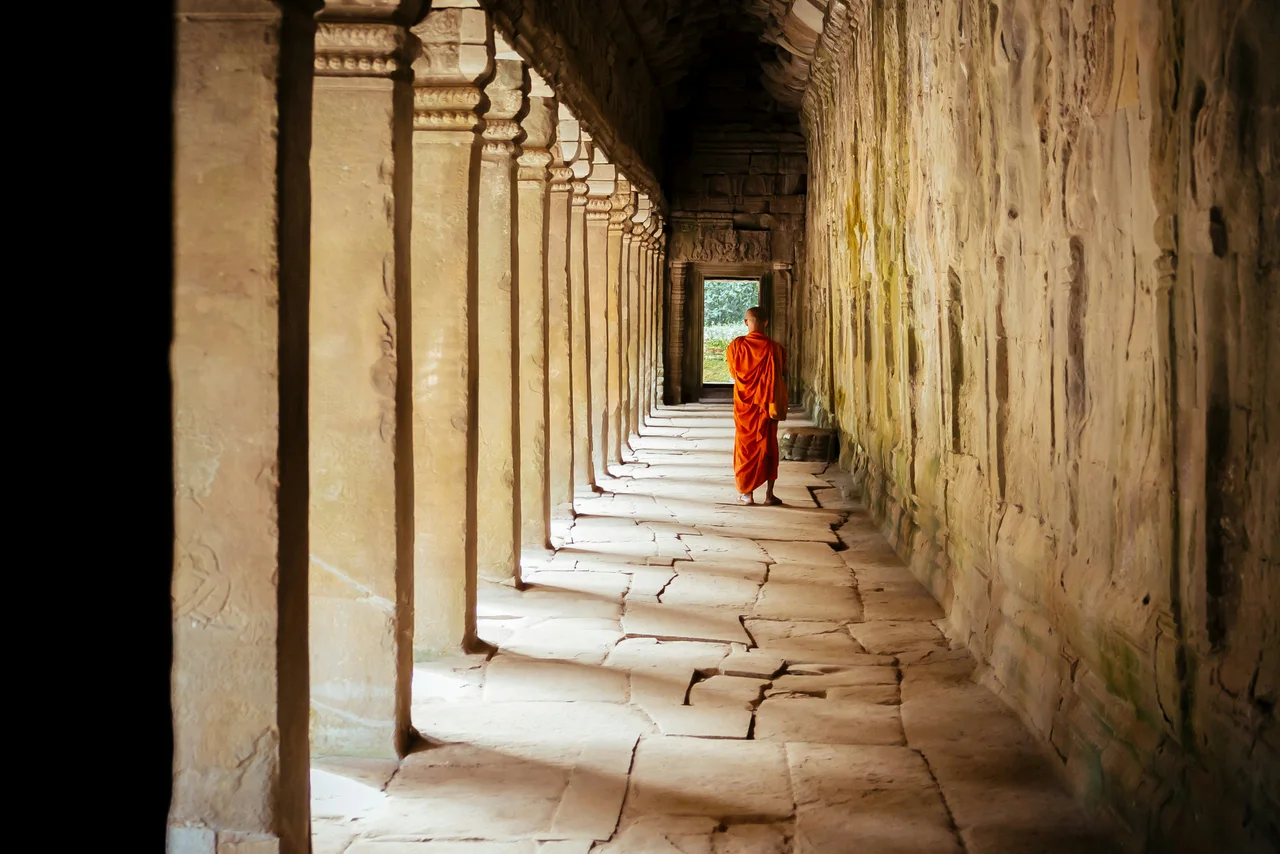
An arcade makes the pattern easy to see, but a much smaller architectural detail can do the same work. A shop awning or the depth of a doorway may be enough. Look for the shadow's shape before deciding whether the object casting it is interesting.
Light gives an ordinary wall a timetable of its own.
Stay for a little while if the place allows it. The change may be slow, but people crossing the frame will show you where the light falls. You might find that an empty view is strongest, or that a single passing figure gives the pattern the scale it needs.
When the light has moved beyond the arrangement you liked, let the picture end there. The same wall may offer something else tomorrow. A photograph can be a record of that brief alignment, without asking the street to hold it for longer.