Through the courtyard door
Shade, plants and a few blue pots make a small interior world.
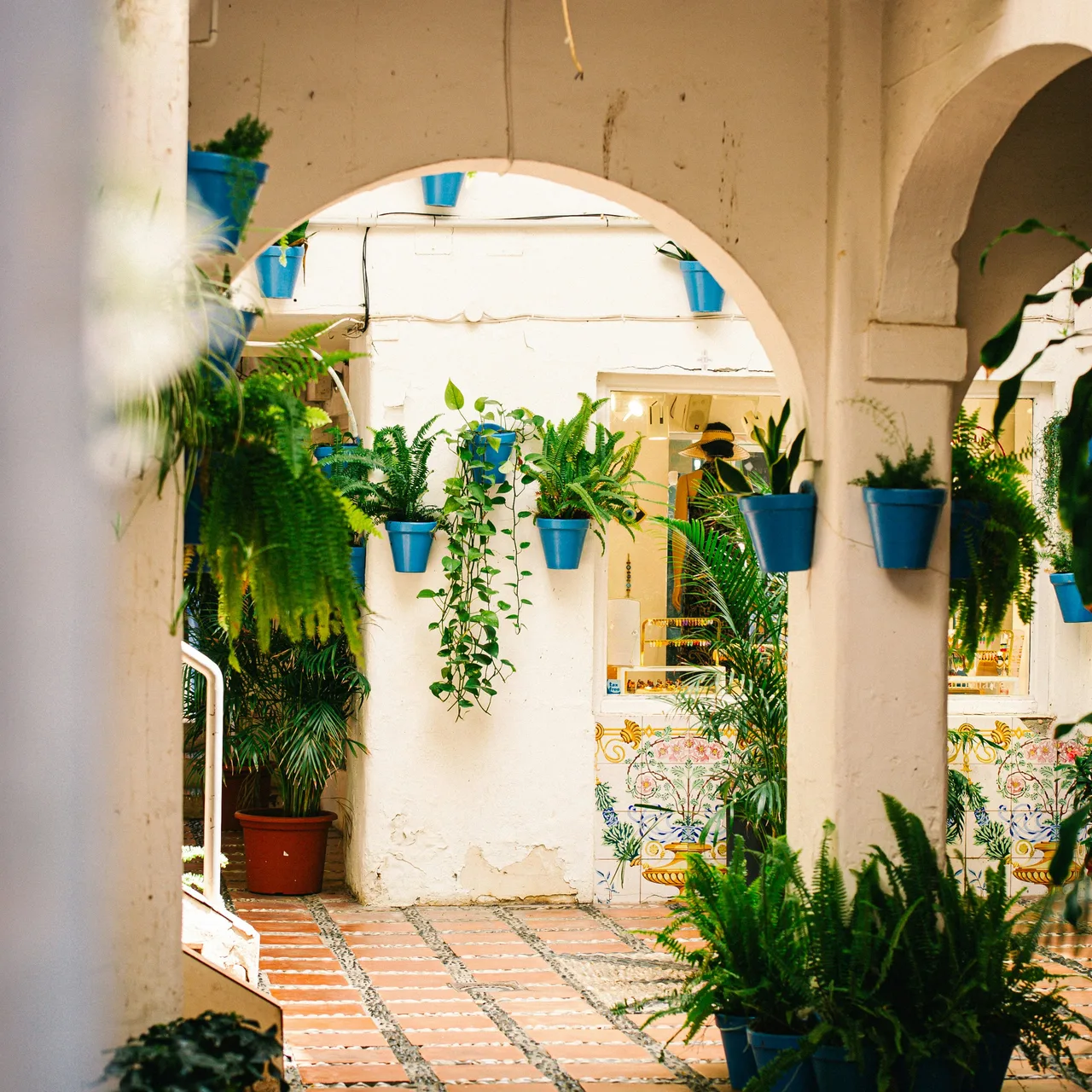
The doorway offers a glimpse rather than a complete view. White walls catch the light, blue pots gather around the edges, and plants soften the geometry of the arches. The courtyard feels separate from the street even though the photograph gives us only a small part of it.
A threshold is a useful place from which to make a picture. It provides a frame already built into the scene, and it lets the viewer understand that there is another space beyond the one they can see. You can suggest depth without showing every corner.
Look at the edges of the doorway
Keep enough of the entrance in the photograph to explain where you are standing. Cropping too closely can turn an interesting glimpse into an ordinary picture of plants. The dark edge, the door frame or a strip of pavement may be what gives the scene its character.
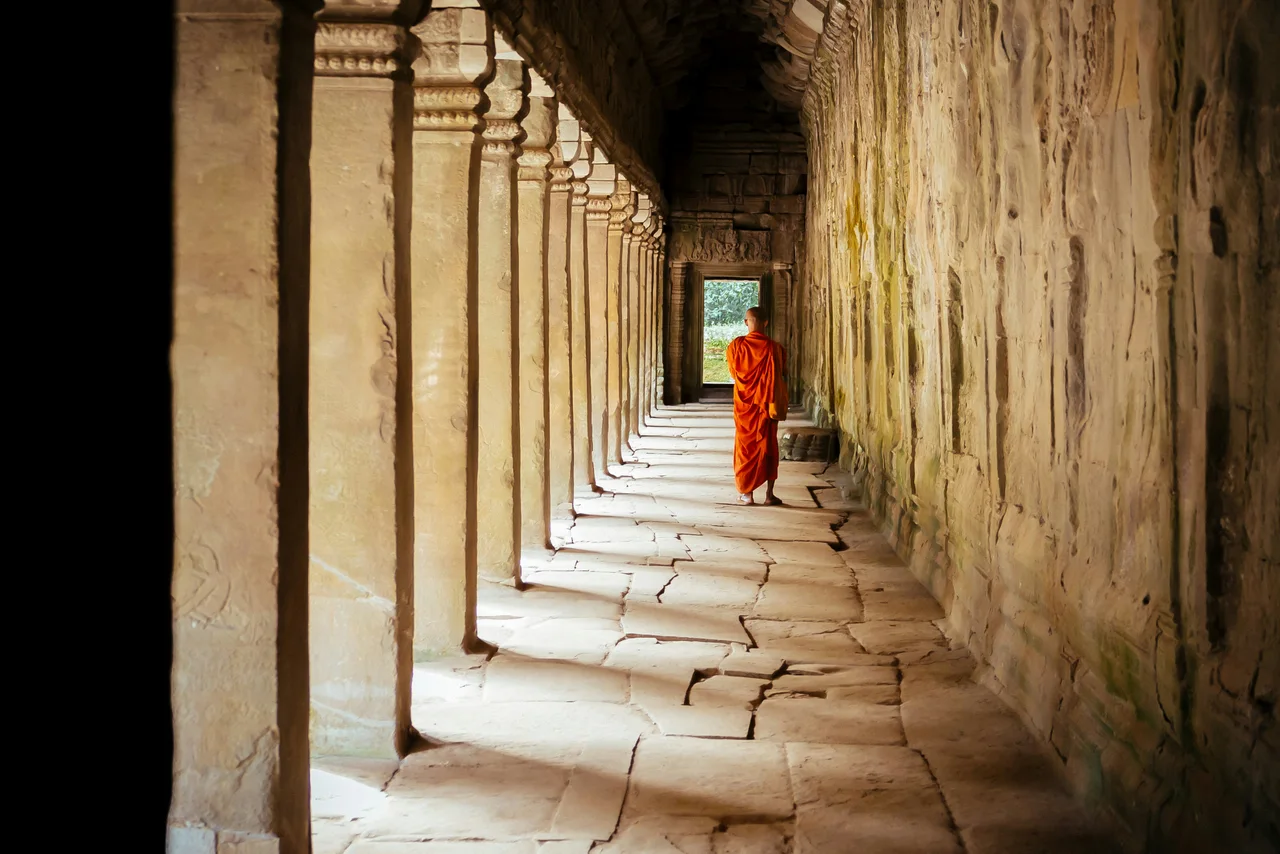
The stone passage uses the same relationship on a larger scale. Each opening repeats the idea of a frame, carrying the eye toward the brighter space at the far end. In the courtyard, the arrangement is looser, but the invitation to look through remains.
Private spaces deserve an ordinary measure of courtesy. A welcoming-looking entrance is still someone's doorway. Ask before stepping inside or photographing people who are using the space. A view from the street may already contain everything the picture needs.
If you return, look for a change in the light rather than trying to reproduce the first image exactly. A pot that was bright may be in shade; a wall may have picked up the colour of a nearby plant. Small enclosed spaces can change their appearance within a surprisingly short distance.
Leave a little of the courtyard undiscovered. The unseen corner is part of what makes the doorway worth looking through.