A pause between departures
The platform belongs to the journey, even when nothing seems to be happening.
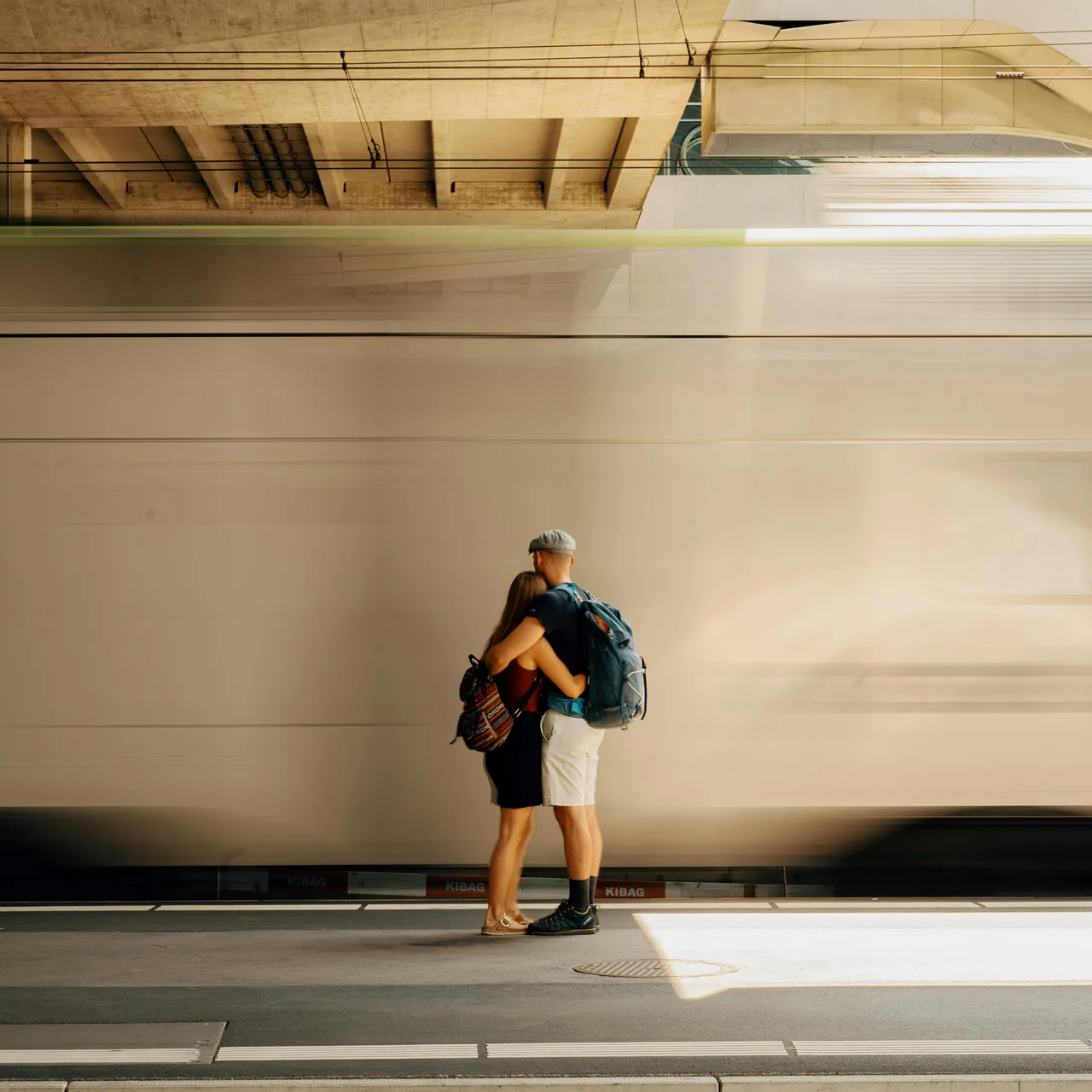
A train passes and the figure on the platform stays still. The difference in movement gives the photograph its structure. One part of the scene has somewhere to go; the other is temporarily waiting for permission to follow.
Waiting spaces have a particular collection of details. There is a bag kept close to a shoe, a glance toward the tracks, the edge of a timetable, a coat pulled more tightly around the body. None of these things needs to be dramatic to be recognizable.
A journey often gets remembered as a sequence of arrivals. The intervals can be harder to describe, even though they occupy much of the day. A photograph made while waiting can preserve the texture of that time better than another view taken after the destination has been reached.
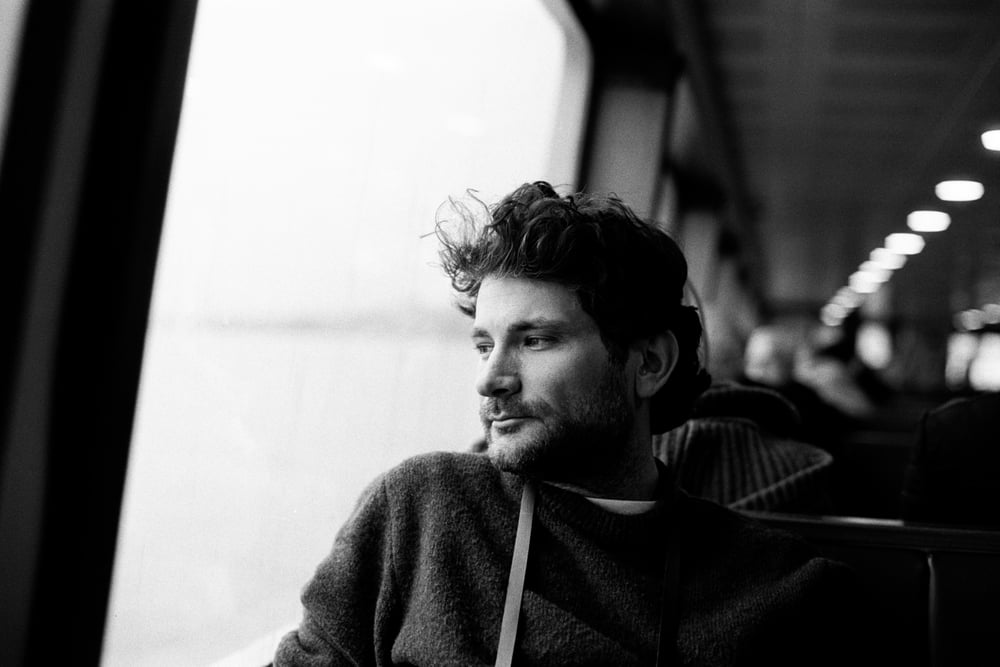
The portrait by the window shifts the story indoors. Its close framing gives the face more weight, while the bright window keeps a connection to the moving world outside. Together, the pictures suggest two different kinds of pause.
Keep a few notes from the middle
Use a notebook for details that might otherwise disappear: the colour of the carriage, the sound of a station announcement, a view that lasted only a moment. Avoid turning another passenger's private conversation into material. There is plenty to record without borrowing what was not offered to you.
One sentence is often enough. A page filled in a hurry can be less useful later than a precise observation made when you had something worth keeping.
Leave space around the photograph when you put the story together. The pause is part of what it shows. A long explanation can crowd out the feeling that made you take the picture in the first place.