The quiet beauty of the coast
Rock, water and a little shade can hold your attention for an entire afternoon.

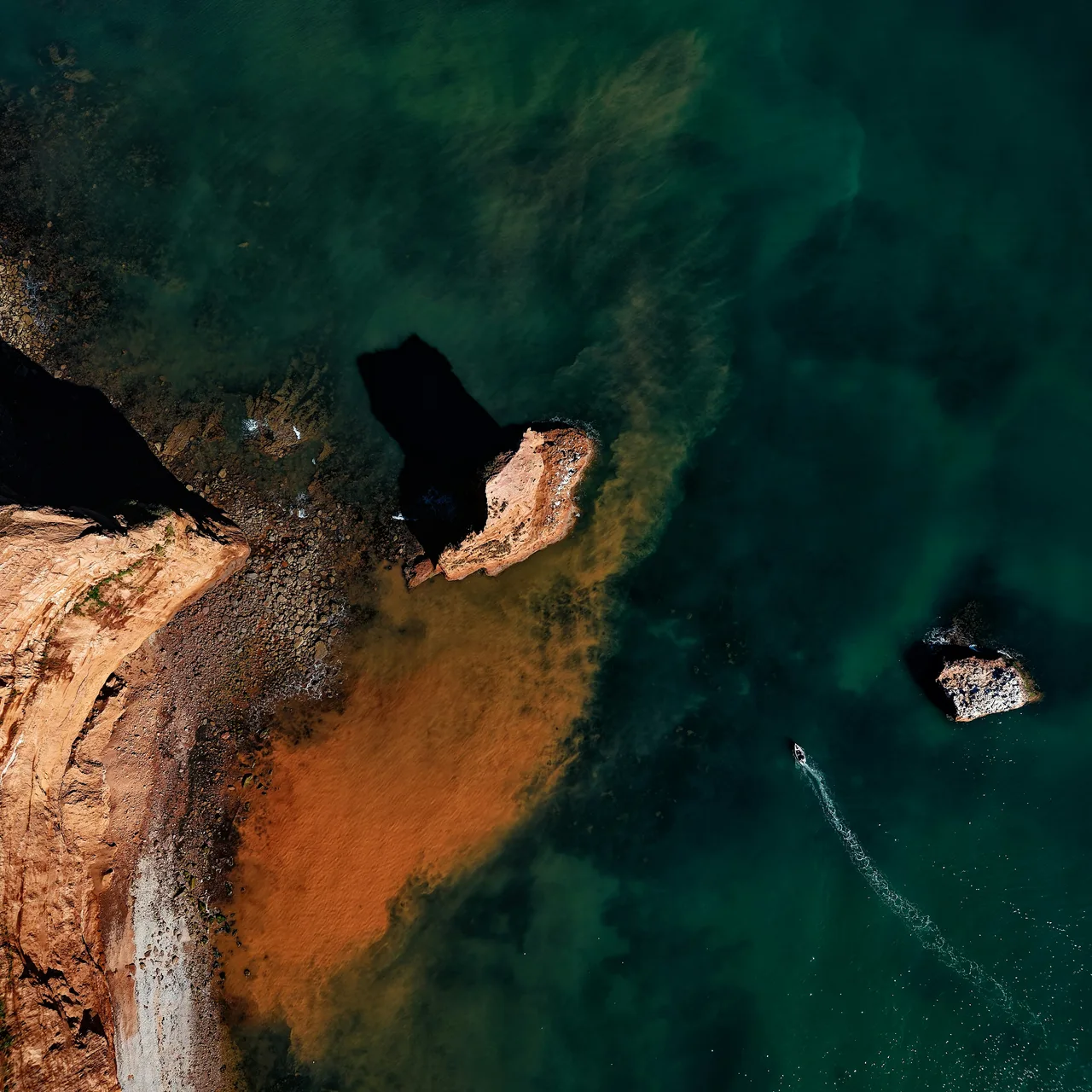
From above, the little boat looks almost suspended. Its pale hull sits against water dark enough to show the shape clearly, while the rock beside it catches the sun. A white umbrella makes a small patch of shelter at the edge of the frame.
Coastal photographs often become crowded with things that promise a holiday. This one works because there is room between its few elements. The boat has somewhere to move. The umbrella gives the eye a place to rest. You can follow the edge of the rock without immediately finding another object in the way.
Stay with the edge
The meeting of land and water is rarely a tidy line. Look closely and there are ledges, shallow pools and changes of colour that disappear in the wider view. A short stretch of shore can offer more to look at than a whole afternoon of changing locations.
Try making a small set of pictures from one place. Include a broad view, something close enough to show texture, and a frame in which the water occupies most of the space. The photographs will have a relationship without needing to look alike.
It helps to put the camera down between them. The surface keeps changing, and watching it for a while makes it easier to choose a moment instead of collecting dozens of nearly identical frames.
What to leave outside the frame
A photograph can suggest the feeling of a place without accounting for everything there. The car park, the crowded path and the lunch bag may all sit a few steps away. Choosing a frame is a decision about attention, not a claim that the rest of the world has disappeared.
Keep the picture that brings you back to the colour of that water. A quieter image can take a little longer to reveal why you want to keep looking.