Where the land meets the sea
Seen from above, a coastline can begin to resemble a painting.

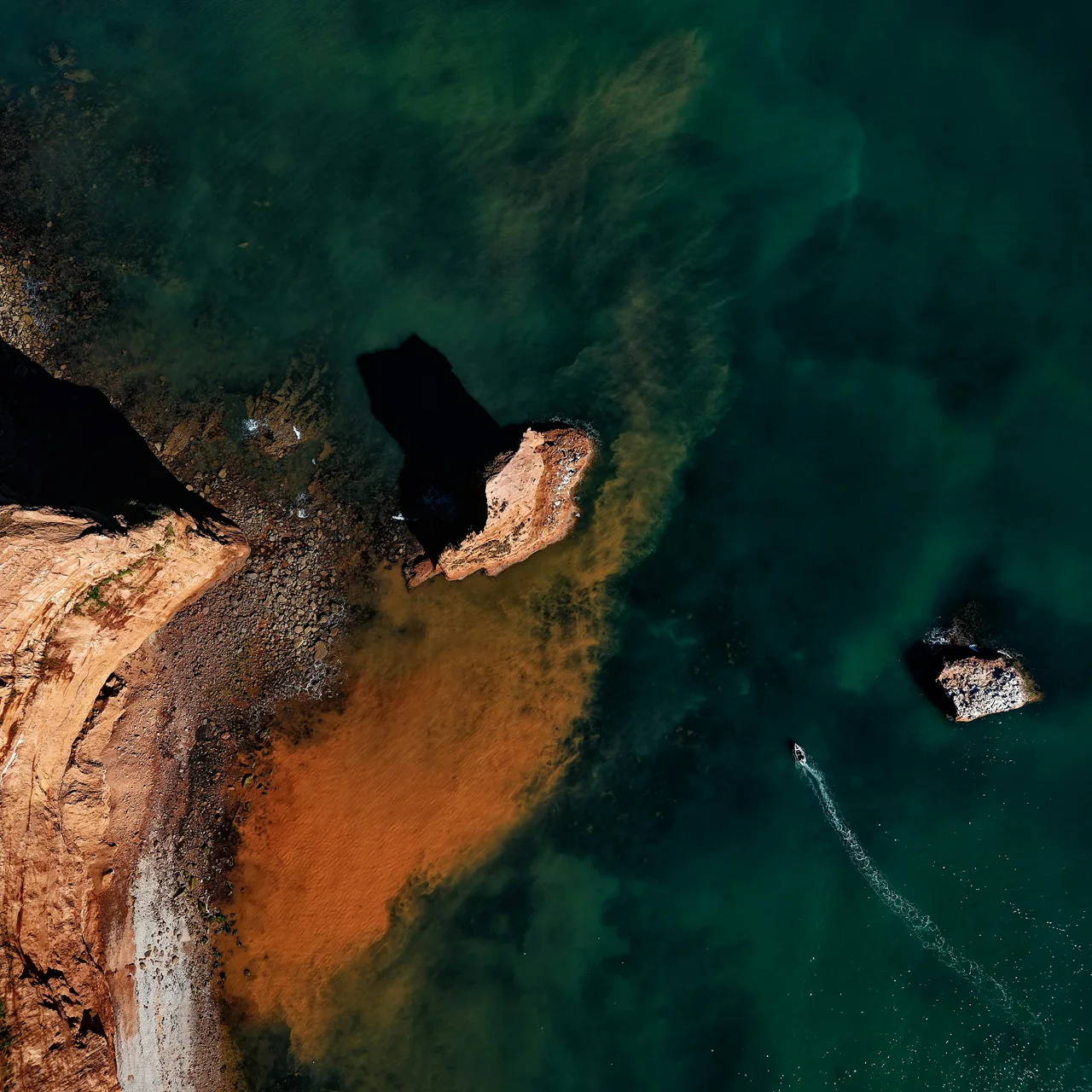
Rust-coloured rock presses into dark green water. The boundary is irregular, with small inlets interrupting the larger shape. Without a familiar object to establish the scale, the photograph can first appear to be a study of colour and texture.
That uncertainty is part of its appeal. The eye reads the broad arrangement before identifying the place. You can enjoy the relationship between the warm rock and cool water without knowing exactly how high the camera was or how far the shore extends beyond the frame.
Read it in two directions
Follow the edge of the land, then follow the bands of colour in the water. These are different routes through the same picture. One is defined by a solid boundary; the other changes gradually and is harder to trace with a finger.
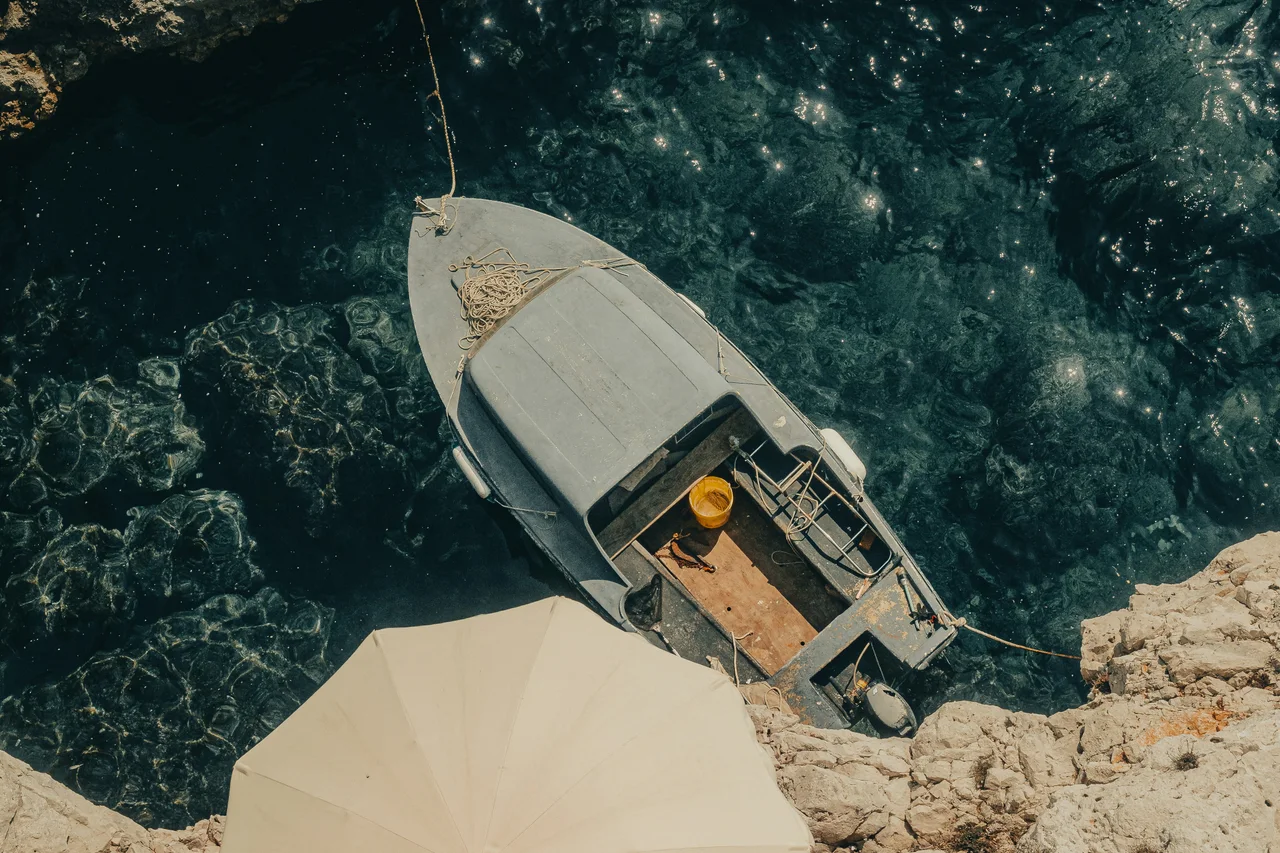
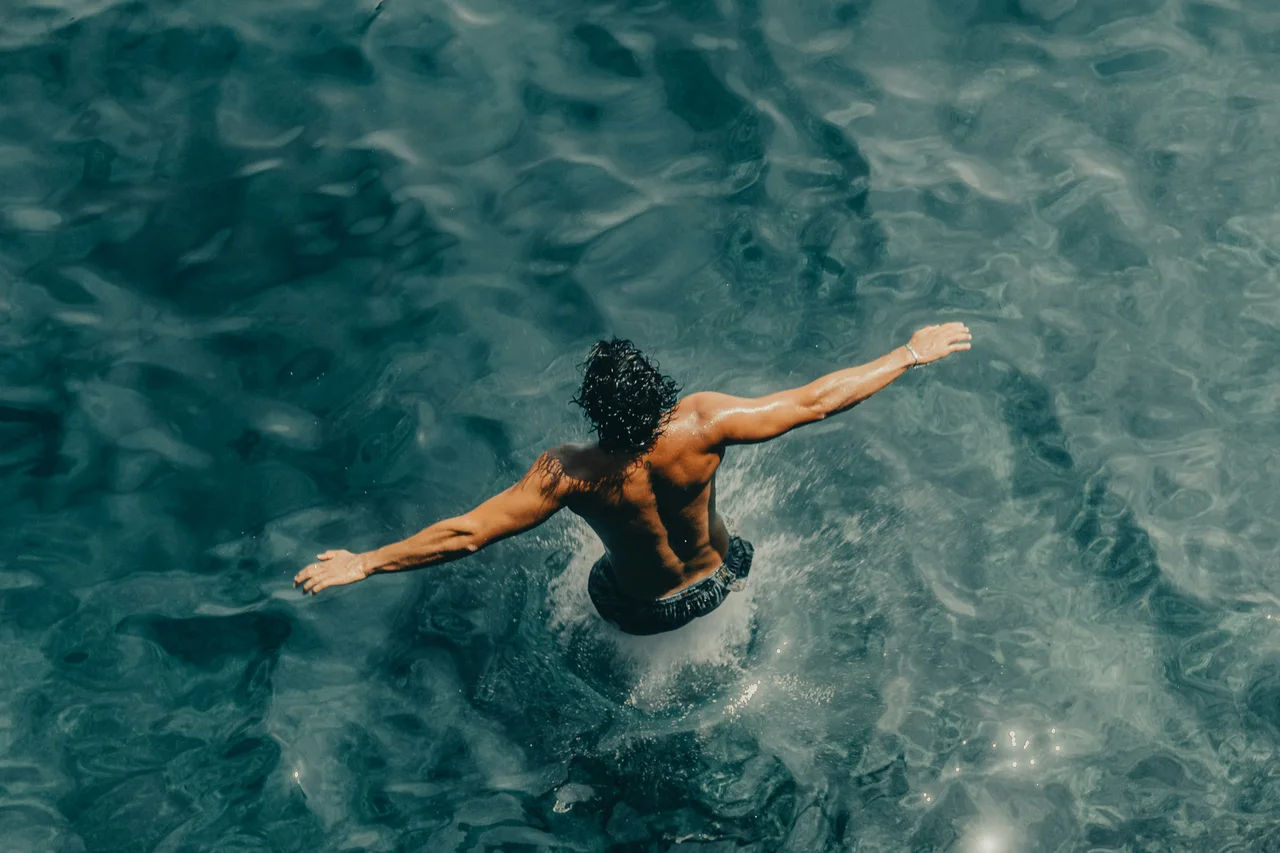
The smaller photographs give the eye something recognizable to measure. A boat explains the size of a cove. A swimmer makes the surface feel close enough to touch. After looking at them, the aerial view may seem larger than it did at first.
A sequence benefits from that change of distance. If every photograph is equally wide, the reader stays outside the place. If every image is close, the surroundings can become difficult to imagine. Moving between the two gives the page a more natural pace.
Choose the order carefully
Try placing the widest image first, then reverse the order. Beginning with a detail can create a little curiosity about where it belongs. Beginning with the landscape gives the details a setting immediately.
Neither order needs a long explanation. Read the photographs as a small group and choose the arrangement that makes you want to keep looking. The strongest sequence is often the one in which each image adds something the previous frame could not show.